
Why Do People Procrastinate Even When They Want to Succeed?
Why Do People Procrastinate Even When They Want to Succeed? Key Takeaways: Procrastination is often an emotional regulation problem, not laziness or a simple lack of motivation. Fear of failure, perfectionism, present bias, low self-efficacy, and cognitive overload can make important tasks harder to start. Reduce procrastination by naming the emotion behind avoidance, breaking tasks […]
Online Hypnotherapy vs In-Person Sessions: Which Is Better?
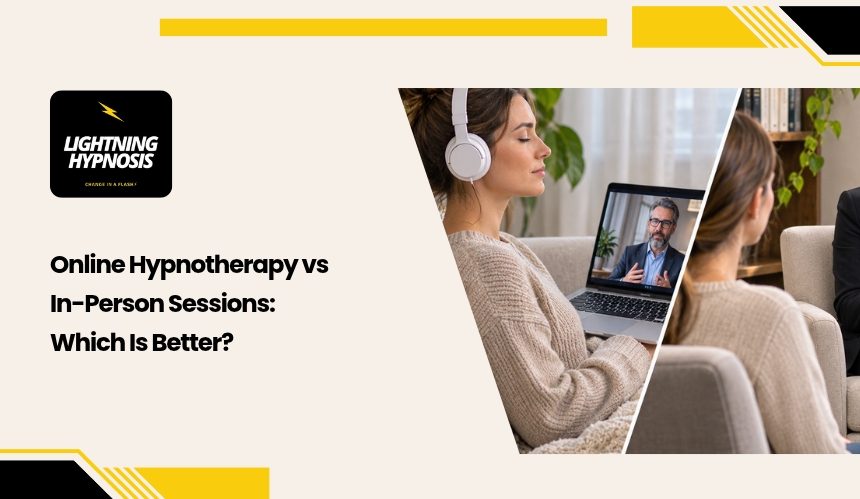
Online Hypnotherapy vs In-Person Sessions: Which Is Better? Key Takeaways Online hypnotherapy can be as effective as in-person sessions for many people, but current research suggests that treatment outcomes depend more on therapist expertise, therapeutic rapport, and client engagement than on the delivery format itself. Choose online hypnotherapy if accessibility, flexibility, and continuity of care […]
What Happens During Your First Hypnotherapy Session?
What Happens During Your First Hypnotherapy Session? Key Takeaways Your first hypnotherapy session usually begins with a consultation to review your goals, health history, current treatments, and whether hypnotherapy is appropriate for your needs. Hypnosis is a focused, relaxed state rather than sleep or loss of control, and you can remain aware, communicate, and stop […]
How Many Hypnotherapy Sessions Do Most People Need?
How Many Hypnotherapy Sessions Do Most People Need? Key Takeaways: Most people need about 3 to 8 hypnotherapy sessions, but the exact number depends on the goal, issue complexity, and individual response. Simple goals like habit change, confidence, or performance improvement may take fewer sessions than anxiety, trauma, or long-standing emotional patterns. Progress should be […]
Hypnotherapy vs Traditional Therapy: Which Is Better for Anxiety?
Hypnotherapy vs Traditional Therapy: Which Is Better for Anxiety? Key Takeaways: Hypnotherapy may be a good fit for mild to moderate anxiety linked to triggers, stress, sleep issues, phobias, or performance pressure. Traditional therapy is often better for anxiety that disrupts daily life, relationships, work, or involves diagnosed conditions like panic disorder, social anxiety, or […]
Can Hypnotherapy Help With Anxiety? What the Research Says
Can Hypnotherapy Help With Anxiety? What the Research Says Key Takeaways: Hypnotherapy may help reduce anxiety symptoms by targeting stress responses, focused attention, emotional regulation, and learned anxiety triggers. Research supports hypnotherapy most strongly as a complementary treatment, especially when combined with CBT, stress management, or other evidence-based care. Hypnotherapy may be useful for mild […]
Understanding the Differences Between CBT-I and Sleep Hypnosis for Insomnia Support
Understanding the Differences Between CBT-I and Sleep Hypnosis for Insomnia Support Sleep difficulties are not always caused by a single issue, which is why different insomnia treatment approaches focus on different parts of the sleep process. Some methods aim to retrain sleep behaviors and routines directly, while others focus more on reducing mental overstimulation and […]
Understanding How Hypnosis May Affect Sleep Patterns and Insomnia Recovery
Understanding How Hypnosis May Affect Sleep Patterns and Insomnia Recovery Sleep difficulties are often influenced by a combination of stress, mental overstimulation, irregular sleep habits, and disrupted sleep conditioning patterns. Because of this, many people exploring non-medication sleep support eventually ask whether hypnosis can help improve sleep quality or even address long-term insomnia symptoms directly. […]
How Sleep Dependency Develops and What Helps Restore Natural Sleep Pattern
How Sleep Dependency Develops and What Helps Restore Natural Sleep Pattern Modern sleep medications can sometimes help people fall asleep faster or reduce short-term sleep disruption, but many individuals eventually notice that the same medication becomes less effective over time. When sleeping pills stop working, the issue is often connected to sleep tolerance, brain adaptation, […]