
- Lightning-Hypnosis
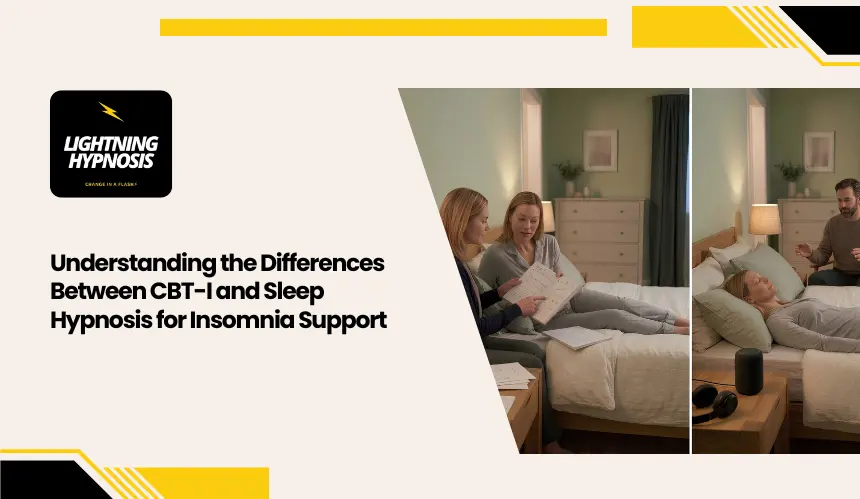
Understanding the Differences Between CBT-I and Sleep Hypnosis for Insomnia Support
Sleep difficulties are not always caused by a single issue, which is why different insomnia treatment approaches focus on different parts of the sleep process. Some methods aim to retrain sleep behaviors and routines directly, while others focus more on reducing mental overstimulation and helping the brain relax before bedtime.
Because of this, many people comparing CBT-I vs sleep hypnosis want to understand how each approach works and which option may better support their specific sleep challenges.
Cognitive behavioral therapy for insomnia is a structured form of behavioral sleep therapy designed to identify and change habits, thoughts, and routines that interfere with healthy sleep.
In contrast, sleep hypnotherapy usually focuses more on guided relaxation, mental conditioning, and sleep anxiety reduction through calming suggestion techniques and guided hypnosis for sleep sessions.
Both approaches are commonly explored as forms of non-medication sleep support for people seeking chronic insomnia support and long-term sleep improvement. However, they differ significantly in how they approach sleep behavior conditioning, sleep cycle regulation, natural sleep recovery, and overall sleep-focused therapy goals.
1. How CBT-I and Sleep Hypnosis Approach Insomnia Differently
Although both approaches aim to improve sleep quality, cognitive behavioral therapy for insomnia and sleep hypnotherapy work in very different ways. CBT-I focuses on identifying and changing behaviors that interfere with healthy sleep, while hypnosis generally focuses more on relaxation, mental suggestion, and reducing nighttime mental overstimulation.
Understanding these differences helps explain why certain insomnia treatment approaches may feel more effective for some individuals, depending on the underlying causes of their sleep difficulties.
How cognitive behavioral therapy for insomnia focuses on behavior change
Cognitive behavioral therapy for insomnia is designed to improve sleep by addressing habits, routines, and thought patterns that negatively affect sleep cycle regulation. This form of behavioral sleep therapy often includes structured sleep scheduling, sleep habit retraining, stimulus control techniques, and cognitive strategies that help reduce unhealthy sleep behaviors.
The goal is to help the brain rebuild stronger, natural sleep recovery patterns by changing the behaviors and mental associations connected to insomnia over time.
How sleep hypnotherapy focuses on relaxation and mental conditioning
Sleep hypnotherapy usually focuses more on guided relaxation and calming mental suggestion rather than structured behavioral correction. Guided hypnosis for sleep often attempts to reduce excessive nighttime thinking, physical tension, and sleep anxiety through repetitive calming techniques and focused mental relaxation.
This type of sleep-focused therapy commonly targets stress-related sleep disruption and mental overstimulation that may interfere with the ability to fall asleep naturally.
2. What Type of Sleep Problems Each Approach Commonly Targets
Different sleep difficulties often respond better to different forms of treatment depending on what is driving the insomnia symptoms. Some people struggle mainly with poor sleep habits and irregular sleep timing, while others experience stress-related mental overstimulation or persistent sleep anxiety at night.
Because CBT-I vs sleep hypnosis focuses on different mechanisms affecting sleep, each approach is commonly used for different patterns of chronic insomnia support and long-term sleep improvement.
Why is CBT-I often used for long-term sleep behavior problems
Behavioral sleep therapy is commonly recommended for individuals whose insomnia is strongly connected to unhealthy sleep habits, inconsistent sleep schedules, excessive time awake in bed, or negative sleep conditioning patterns developed over time.
Cognitive behavioral therapy for insomnia focuses heavily on sleep habit retraining and sleep cycle regulation because these behavioral patterns often play a major role in chronic insomnia symptoms. CBT-I is frequently used when long-term natural sleep recovery requires structured behavioral change rather than temporary symptom relief.
How sleep hypnosis may help stress-related sleep disruption
Sleep hypnotherapy is often explored when insomnia symptoms are strongly connected to mental overstimulation, stress, nighttime overthinking, or difficulty relaxing before sleep. Guided hypnosis for sleep commonly targets the mental and emotional side of sleep disruption rather than focusing primarily on structured sleep scheduling.
Relaxation-focused non-medication sleep support may feel more helpful for individuals whose sleep difficulties are heavily influenced by stress, anxiety, or heightened nighttime mental activity.
How sleep anxiety reduction can influence treatment choice
Some individuals develop a strong fear or frustration around sleep itself after repeated nights of poor sleep. In these situations, sleep anxiety reduction becomes an important part of the overall insomnia treatment approach because mental stress may continue reinforcing insomnia symptoms.
Sleep-focused therapy methods that reduce bedtime tension and negative sleep expectations may help improve sleep behavior conditioning and support healthier long-term sleep patterns over time.
3. How Long-Term Sleep Improvement Differs Between Both Approaches
Long-term sleep improvement usually depends on how effectively an approach addresses the underlying causes of disrupted sleep patterns. While both CBT-I and sleep hypnotherapy aim to support better sleep, they often produce long-term results through different mechanisms.
Behavioral sleep therapy generally focuses on changing daily sleep behaviors and rebuilding stable sleep cycle regulation, while hypnosis-based approaches often focus more on mental relaxation and reducing emotional barriers connected to sleep.
How sleep habit retraining supports natural sleep recovery
Cognitive behavioral therapy for insomnia places strong emphasis on sleep habit retraining because many chronic insomnia patterns are reinforced by unhealthy bedtime routines, inconsistent schedules, and negative sleep associations developed over time.
By gradually changing these behaviors, CBT-I attempts to strengthen natural sleep recovery and improve the brain’s ability to maintain healthier sleep patterns without relying heavily on external sleep aids.
Why behavioral sleep therapy focuses on sleep cycle regulation
Sleep cycle regulation plays an important role in maintaining consistent sleep quality and stable circadian timing. Behavioral sleep therapy often targets irregular sleep schedules, prolonged daytime sleeping, and disrupted nighttime routines that interfere with healthy biological sleep timing.
Improving these patterns may help the body rebuild stronger internal sleep signals and support more consistent long-term sleep improvement.
How hypnosis may support non-medication sleep support strategies
Sleep hypnotherapy is often used as part of broader non-medication sleep support plans designed to reduce stress, calm nighttime mental activity, and encourage relaxation before bedtime. Guided mental conditioning and calming suggestion techniques may help certain individuals improve relaxation and reduce sleep-related tension more effectively.
For some people, combining relaxation-focused sleep hypnosis with structured insomnia treatment approaches may provide more balanced support for both behavioral and emotional sleep difficulties.
4. How to Decide Which Sleep-Focused Therapy Fits Your Needs
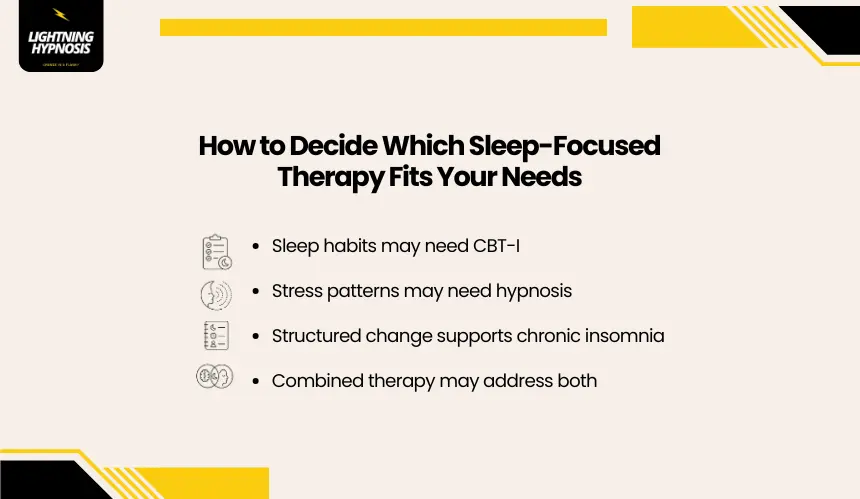
Choosing between CBT-I vs sleep hypnosis often depends on what is contributing most to the sleep difficulty. Some individuals struggle primarily with unhealthy sleep routines and long-term sleep behavior conditioning problems, while others experience stress-driven mental overstimulation that makes relaxation difficult at night.
Because different insomnia treatment approaches target different sleep mechanisms, the most effective option often depends on the specific pattern of chronic insomnia support a person needs.
Common situations where each approach may fit better
Different sleep-focused therapy methods may feel more suitable depending on the type of sleep disruption involved.
- Persistent Poor Sleep Habits: Cognitive behavioral therapy for insomnia is often recommended when inconsistent routines and unhealthy sleep behaviors drive insomnia symptoms.
- Stress-Related Sleep Difficulty: Sleep hypnotherapy may feel more helpful for people dealing with racing thoughts and difficulty mentally relaxing at bedtime.
- Need for Structured Behavioral Change: Behavioral sleep therapy usually provides more organized strategies for sleep habit retraining and sleep cycle regulation.
- Preference for Relaxation-Based Support: Guided hypnosis for sleep focuses more on calming the mind and reducing nighttime overstimulation.
- Interest in Non-Medication Sleep Support: Both approaches are commonly explored as alternatives to long-term sleep medication use.
- Combination Treatment Goals: Some chronic insomnia support plans combine CBT-I and hypnosis to address both behavioral sleep patterns and sleep anxiety reduction simultaneously.
Frequently Asked Questions
Is CBT-I considered more effective than sleep hypnosis for chronic insomnia?
Cognitive behavioral therapy for insomnia is widely recommended for chronic insomnia support because it directly targets sleep behaviors, routines, and sleep cycle regulation patterns. However, sleep hypnotherapy may still help certain individuals, especially when stress and nighttime mental overstimulation are major factors.
Can sleep hypnosis work without behavioral sleep therapy?
Guided hypnosis for sleep may help some people improve relaxation and reduce sleep anxiety on its own, but long-term sleep improvement often requires broader behavioral changes connected to sleep habits and nighttime routines.
How long does CBT-I usually take to show results?
Behavioral sleep therapy often requires several weeks of consistent practice because the goal is gradual sleep habit retraining and natural sleep recovery rather than immediate symptom suppression.
Does sleep hypnosis involve being unconscious or asleep?
Sleep hypnotherapy usually involves a relaxed and highly focused mental state rather than unconsciousness. Most individuals remain aware during the process while practicing brain relaxation and guided mental conditioning techniques.
Can both approaches be combined together?
Some insomnia treatment approaches combine CBT-I with sleep hypnosis strategies to address both behavioral sleep problems and stress-related sleep disruption simultaneously. Combination approaches may support more balanced chronic insomnia treatment for certain individuals.
Which approach is better for sleep anxiety reduction?
Sleep-focused therapy involving hypnosis may feel more calming for individuals whose insomnia is strongly connected to bedtime stress, fear of not sleeping, or racing thoughts. CBT-I may still help by changing the behaviors and mental patterns reinforcing those sleep concerns over time.