
- Lightning-Hypnosis
Hypnotherapy vs Traditional Therapy: Which Is Better for Anxiety?
Key Takeaways:
|
Anxiety can affect daily routines, relationships, sleep quality, and overall emotional well-being. Many people exploring treatment options often wonder whether hypnotherapy or traditional therapy offers better support for managing anxiety symptoms.
The answer depends on factors such as the type of anxiety, personal preferences, and the goals of treatment. Both approaches use different methods and may provide value in different situations.
This article compares hypnotherapy and traditional therapy for anxiety to help readers understand how each approach works and which option may be the better fit for their needs.
Understanding How Hypnotherapy and Traditional Therapy Approach Anxiety
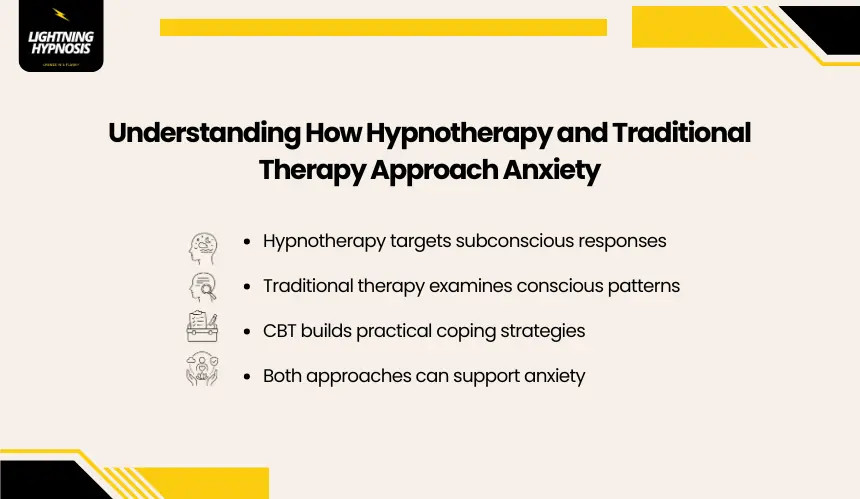
Both approaches aim to reduce anxiety symptoms, but they use different therapeutic frameworks. The main distinction lies in how each method attempts to influence thoughts, emotions, and behavioral responses associated with anxiety.
How Hypnotherapy Works for Anxiety
Hypnotherapy uses guided relaxation and focused attention to place individuals in a highly receptive mental state. During this process, a certified hypnotherapist may work with anxiety-related beliefs, emotional triggers, and automatic responses that operate below conscious awareness.
The goal is not to remove memories or control behavior. Instead, hypnotherapy seeks to encourage healthier responses to stress, fear, and recurring anxious patterns. Some individuals use hypnotherapy alongside other mental health treatments rather than as a standalone approach.
How Traditional Therapy Addresses Anxiety
Traditional therapy focuses on conscious thoughts, emotions, and behaviors. Approaches such as cognitive behavioral therapy (CBT), exposure therapy, and talk therapy help individuals identify unhelpful thinking patterns and develop practical coping strategies.
Sessions often involve discussing experiences, recognizing triggers, and learning techniques that can be applied in everyday situations. This process helps individuals build long-term skills for managing anxiety and emotional distress.
The Main Difference Between Conscious and Subconscious Approaches
Traditional therapy primarily works through conscious analysis and behavioral change. Patients actively examine thoughts, challenge cognitive distortions, and practice new coping methods.
Hypnotherapy focuses more on subconscious associations and conditioned responses. Rather than analyzing every thought in detail, it attempts to influence the deeper mental patterns that may contribute to anxiety symptoms.
Because these approaches target different aspects of emotional processing, some individuals may benefit more from one method, while others may respond well to a combination of both.
Potential Benefits of Hypnotherapy for Anxiety
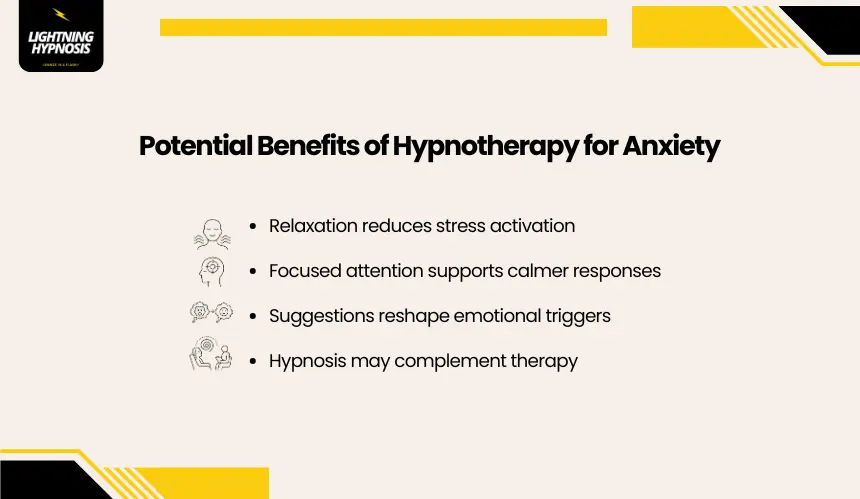
Hypnotherapy is often used as a complementary approach for anxiety because it targets stress responses and learned emotional patterns. Its potential benefits are linked to relaxation techniques, focused attention, and subconscious conditioning rather than medication or direct cognitive analysis.
Promoting Relaxation and Stress Reduction
Anxiety activates the body’s stress response system, increasing heart rate, muscle tension, and mental hypervigilance. Hypnotherapy sessions typically incorporate controlled breathing, visualization, and progressive relaxation techniques that encourage activation of the parasympathetic nervous system.
This shift toward a calmer physiological state may help reduce symptoms such as restlessness, racing thoughts, and excessive worry. Some individuals also report improved sleep quality because reduced physical tension can support better recovery and emotional regulation.
Addressing Emotional Triggers and Thought Patterns
Certain anxiety responses develop through repeated associations between situations and emotional reactions. Hypnotherapy attempts to access these learned patterns while the individual is in a focused state of awareness.
Techniques such as guided imagery, positive suggestion, and cognitive reframing may be used to alter how specific triggers are perceived. For example, a person with performance anxiety may work on replacing automatic fear responses with calmer behavioral associations.
Because emotional conditioning varies between individuals, outcomes can differ depending on the underlying cause and severity of anxiety symptoms.
Why Some People Prefer a Short-Term or Complementary Approach
Some individuals choose hypnotherapy because sessions are often goal-oriented and focused on specific concerns such as public speaking anxiety, phobias, stress management, or sleep-related anxiety.
Hypnotherapy is also frequently integrated with other treatments, including cognitive behavioral therapy and mindfulness-based interventions. Combining approaches allows patients to address both conscious coping strategies and subconscious emotional responses.
Research has also supported the use of hypnosis as an adjunctive intervention for anxiety. A 2019 meta-analysis of 17 clinical trials found that hypnosis reduced anxiety symptoms more effectively than control conditions, with stronger outcomes observed when hypnosis was combined with other psychological treatments rather than used alone. |
For people seeking additional support beyond conventional talk therapy, hypnotherapy may serve as an adjunctive tool rather than a replacement for comprehensive mental health care.
Potential Benefits of Traditional Therapy for Anxiety
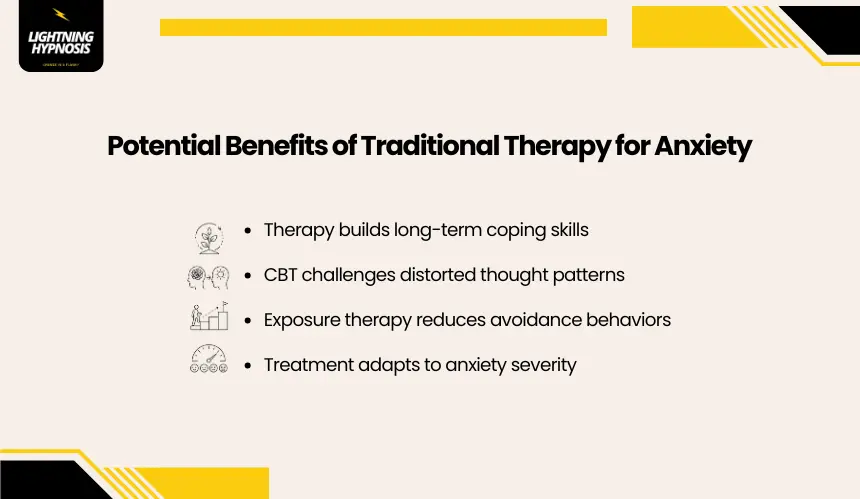
Traditional therapy remains one of the most established approaches for anxiety treatment because it provides structured methods for identifying, managing, and modifying anxiety-related behaviors. Many forms of psychotherapy are supported by clinical research and can be adapted to different anxiety disorders and symptom severity levels.
Building Long-Term Coping Skills
Anxiety often involves recurring thought patterns, avoidance behaviors, and heightened stress responses. Traditional therapy focuses on teaching practical skills that patients can apply outside therapy sessions.
These skills may include stress management techniques, emotional regulation strategies, problem-solving methods, and behavioral exercises. Over time, repeated use of these tools can improve resilience and help individuals respond more effectively to anxiety-provoking situations.
Unlike interventions that primarily target symptom relief, traditional therapy often emphasizes long-term self-management and relapse prevention.
Evidence-Based Approaches Such as Cognitive Behavioral Therapy
Several therapeutic models are used to treat anxiety, with cognitive behavioral therapy (CBT) being one of the most widely studied. CBT works by identifying cognitive distortions and replacing unhelpful thought patterns with more balanced interpretations.
Other evidence-based approaches include:
- Exposure therapy for phobias and panic-related conditions
- Acceptance and commitment therapy (ACT) for psychological flexibility
- Dialectical behavior therapy (DBT) for emotional regulation
- Mindfulness-based cognitive therapy for stress and recurrent anxiety
These approaches use structured protocols that allow treatment plans to be tailored according to the patient’s symptoms and treatment goals.
Support for Different Types and Severity Levels of Anxiety
Traditional therapy can be used across a broad range of anxiety disorders, including generalized anxiety disorder, social anxiety disorder, panic disorder, obsessive-compulsive disorder, and specific phobias.
Because treatment plans are individualized, therapists can adjust session frequency, therapeutic techniques, and treatment duration according to symptom intensity and functional impairment. In moderate to severe cases, psychotherapy may also be combined with medication management under the supervision of qualified healthcare professionals.
This flexibility allows traditional therapy to address both situational anxiety and chronic anxiety conditions that require ongoing support.
Which Therapy Is Better for Anxiety?
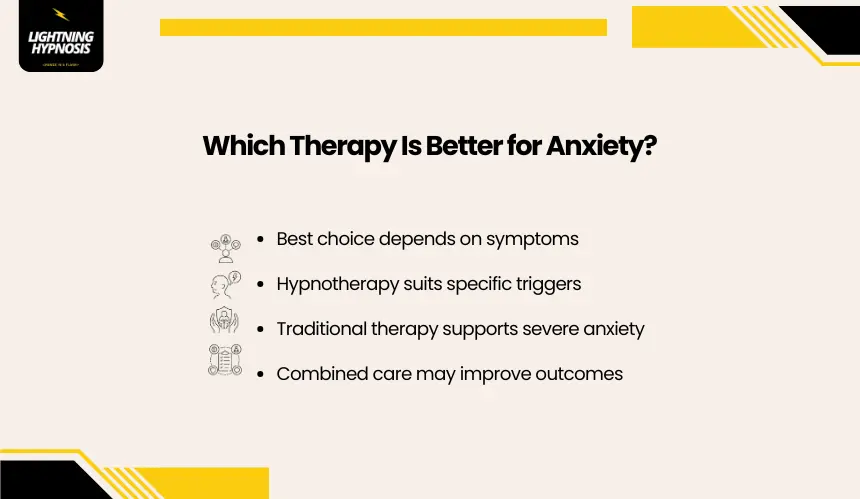
There is no single treatment that works best for every person with anxiety. The effectiveness of hypnotherapy and traditional therapy depends on factors such as symptom severity, anxiety type, treatment goals, and individual response to therapy.
When Hypnotherapy May Be a Good Fit
Hypnotherapy may be appropriate for individuals whose anxiety is linked to specific triggers, conditioned fears, performance pressure, stress-related sleep problems, or habitual thought patterns.
Some people also prefer hypnotherapy when they are looking for a complementary technique that focuses on relaxation and subconscious processing. It is commonly used alongside existing mental health treatment plans rather than replacing them.
Hypnotherapy may be more suitable for mild to moderate anxiety when the individual is comfortable with guided imagery and focused attention techniques.
When Traditional Therapy May Be More Appropriate
Traditional therapy is often recommended when anxiety significantly interferes with daily functioning, relationships, work performance, or overall quality of life.
Because evidence-based therapies such as CBT, ACT, and exposure therapy have established treatment protocols, they are frequently used for generalized anxiety disorder, panic disorder, social anxiety disorder, and other clinically diagnosed anxiety conditions.
Individuals with complex mental health concerns or coexisting conditions may also benefit from the structured assessment and ongoing monitoring available through traditional psychotherapy.
Can Both Approaches Be Used Together?
Yes. Hypnotherapy and traditional therapy are not mutually exclusive. Many practitioners view them as complementary rather than competing approaches.
A combined strategy may allow patients to address anxiety from multiple angles. Traditional therapy can provide cognitive and behavioral tools, while hypnotherapy may target stress responses, emotional associations, and relaxation mechanisms.
Because treatment effectiveness varies between individuals, the most appropriate approach is often the one that aligns with a person’s symptoms, preferences, and recommendations from qualified mental health professionals.
Looking for professional hypnotherapy support for anxiety? Lightning Hypnosis provides anxiety-focused hypnotherapy for individuals in El Paso, TX, Las Cruces, NM, Horizon City, TX, and surrounding communities across Texas and New Mexico. Whether anxiety is affecting daily life, sleep, or stress levels, the team at Lightning Hypnosis offers personalized sessions designed to help clients develop calmer and healthier responses.
Frequently Asked Questions
How many hypnotherapy sessions are usually needed for anxiety?
The number of hypnotherapy sessions for anxiety depends on symptom patterns, triggers, and treatment goals. Some people seek short-term support for stress, sleep anxiety, or performance-related fear, while others need ongoing sessions. A qualified hypnotherapist usually assesses progress based on emotional response, relaxation depth, and daily anxiety reduction.
Can hypnotherapy replace medication for anxiety?
Hypnotherapy should not replace prescribed anxiety medication without guidance from a licensed healthcare provider. It may support relaxation, emotional regulation, and trigger response, but medication decisions require medical supervision. People using antidepressants, anti-anxiety medication, or psychiatric treatment should discuss hypnotherapy as a complementary option with their provider.
Is hypnotherapy safe for people with panic attacks?
Hypnotherapy may be helpful for some people with panic-related anxiety, but the approach should be carefully adapted. Panic attacks involve intense physical symptoms, such as rapid heartbeat, chest tightness, dizziness, and fear of losing control. A trained professional should screen symptom severity and avoid techniques that intensify distress.
What should someone look for in an anxiety hypnotherapist?
A person should look for a hypnotherapist with proper training, anxiety-focused experience, clear session structure, and ethical intake practices. Strong providers explain the process, discuss limitations, and avoid promising instant cures. For clinical anxiety disorders, collaboration with a licensed mental health professional can provide safer and more complete support.
Does hypnotherapy work if someone has trouble relaxing?
Difficulty relaxing does not automatically mean hypnotherapy will fail. Many anxious people start sessions with racing thoughts, body tension, or mental resistance. Skilled hypnotherapists use gradual induction methods, breathing control, and guided attention to help the nervous system settle before deeper therapeutic suggestions are introduced.