
- Lightning-Hypnosis
How Sleep Dependency Develops and What Helps Restore Natural Sleep Pattern
Modern sleep medications can sometimes help people fall asleep faster or reduce short-term sleep disruption, but many individuals eventually notice that the same medication becomes less effective over time. When sleeping pills stop working, the issue is often connected to sleep tolerance, brain adaptation, and changes in the body’s natural sleep regulation process rather than the medication suddenly failing on its own.
Long-term sleep medication use may gradually alter how the brain responds to sleep signals, especially when the body becomes dependent on external sleep aids to initiate rest consistently. As sleep dependency develops, natural sleep patterns and normal sleep cycle regulation can become more difficult to maintain without medication support.
Research in sleep medicine increasingly focuses on how behavioral and neurological conditioning affect chronic insomnia and long-term sleep quality. Many insomnia treatment approaches now emphasize retraining the brain through cognitive behavioral therapy for insomnia, circadian rhythm support, healthy sleep habits, and non-medication sleep therapy designed to support the overall sleep recovery process naturally.
1. Why Sleeping Pills Become Less Effective Over Time
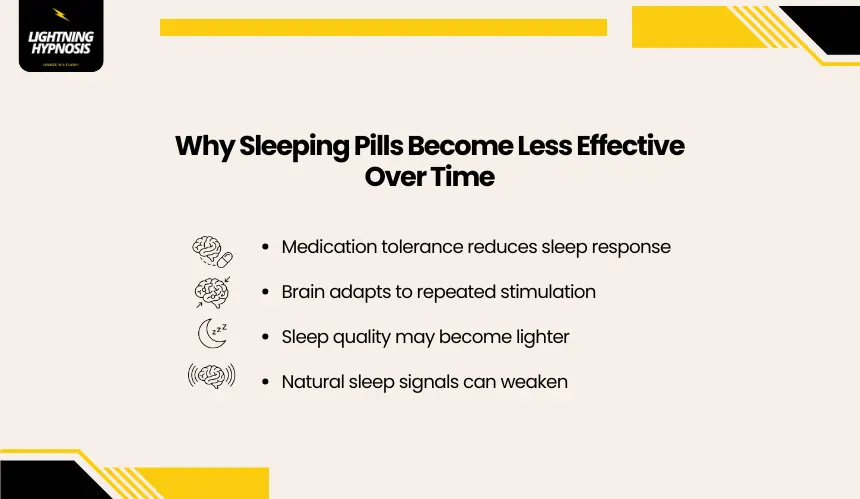
Many sleep medications are designed to slow brain activity or promote relaxation signals that make falling asleep easier in the short term. However, with repeated exposure, the brain may gradually adapt to the medication’s effects, causing the same dosage to feel less effective over time.
This process is commonly linked to sleep tolerance, where the body becomes increasingly accustomed to the medication and requires stronger or more frequent support to produce the same sleep response. As tolerance develops, long-term sleep medication use may begin affecting the brain’s natural ability to regulate sleep independently.
How sleep tolerance develops with repeated medication use
The brain constantly adjusts to repeated chemical stimulation in order to maintain balance within the nervous system. When sleep aids are used consistently for extended periods, the brain may reduce its sensitivity to the medication’s calming effects.
As a result, some individuals experience shorter sleep duration, lighter sleep quality, or increasing difficulty falling asleep without medication support. This adaptation process is one reason sleeping pills stop working for some long-term users.
Why the brain adapts to external sleep support
Natural sleep patterns are controlled through complex neurological and hormonal signaling tied to circadian rhythm support and internal sleep timing. Regular dependence on external sleep aids may gradually interfere with how the brain initiates these natural sleep signals on its own.
Over time, brain sleep conditioning may begin associating sleep primarily with medication use rather than natural tiredness cues. This shift can make chronic insomnia more difficult to manage without addressing the underlying behavioral and neurological sleep patterns involved.
2. How Sleep Dependency Can Disrupt Natural Sleep Patterns
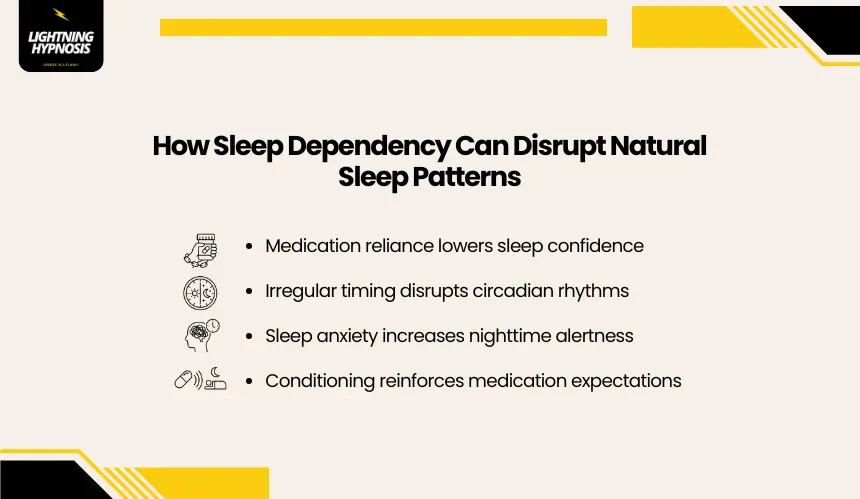
As sleep dependency develops, the brain may gradually become less confident in its ability to fall asleep naturally without external support. Over time, this dependency can interfere with natural sleep patterns, increase nighttime anxiety around sleep, and disrupt normal sleep cycle regulation.
Instead of responding naturally to tiredness signals, the brain may begin relying more heavily on medication-related cues to initiate sleep. This shift in brain sleep conditioning is one reason chronic insomnia sometimes continues even when stronger sleep medication is introduced.
Common ways sleep dependency affects sleep behavior
Long-term reliance on sleep aids may gradually influence both physical sleep responses and psychological expectations surrounding bedtime.
- Reduced Natural Sleep Confidence: Some individuals begin believing they cannot sleep without medication support.
- Irregular Sleep Timing: Dependence on medication may interfere with normal circadian rhythm support and bedtime consistency.
- Increased Sleep Anxiety: Fear of not sleeping can increase mental alertness and make relaxation more difficult at night.
- Disrupted Sleep Cycle Regulation: The brain may struggle to maintain consistent sleep-wake patterns naturally over time.
- Stronger Sleep Anticipation Patterns: Brain sleep conditioning may reinforce the expectation that medication is required before sleep can happen.
- Persistent Chronic Insomnia: Sleep difficulties sometimes continue even after medication adjustments because the behavioral sleep patterns remain unchanged.
3. What Actually Helps Retrain the Brain for Better Sleep
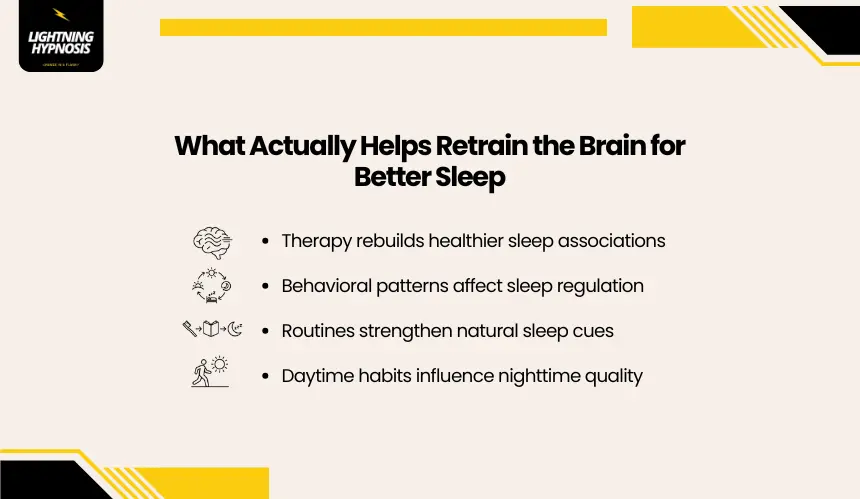
Long-term sleep improvement usually requires more than temporarily forcing the body into sleep through medication alone. Many modern insomnia treatment approaches now focus on helping the brain rebuild healthier sleep associations, restore natural sleep timing, and reduce dependency on external sleep triggers over time.
Instead of suppressing symptoms temporarily, non-medication sleep therapy aims to retrain your brain for sleep by improving behavioral patterns, nighttime routines, and overall sleep regulation processes. These approaches are often designed to support long-term sleep recovery rather than short-term sedation.
How cognitive behavioral therapy for insomnia changes sleep conditioning
Cognitive behavioral therapy for insomnia focuses on identifying behaviors and thought patterns that reinforce poor sleep habits or nighttime anxiety. The goal is to gradually rebuild healthier sleep associations while reducing behaviors that disrupt natural sleep patterns.
This therapy commonly addresses issues such as irregular sleep schedules, excessive time awake in bed, sleep-related stress, and negative expectations surrounding sleep. Over time, healthier behavioral conditioning may help improve sleep cycle regulation naturally.
Why healthy sleep habits support long-term sleep recovery
Consistent bedtime routines, reduced nighttime stimulation, and proper circadian rhythm support all help strengthen the body’s natural sleep signals. Healthy sleep habits encourage the brain to reconnect sleep with regular biological timing instead of relying entirely on medication-based sleep cues.
Many sleep recovery process strategies also focus on improving daytime activity patterns, light exposure, and stress management because these factors strongly influence nighttime sleep quality and overall brain sleep conditioning.
4. Why Long-Term Sleep Recovery Usually Requires Behavioral Change
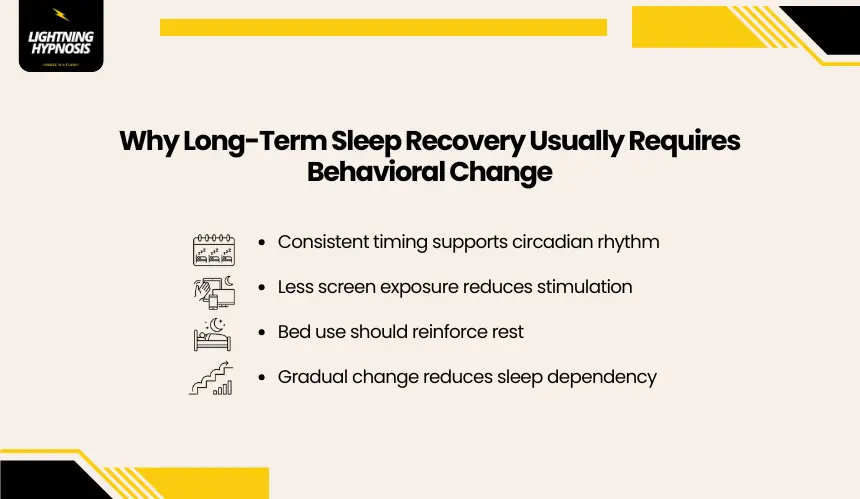
Many people look for immediate solutions to chronic insomnia, but long-term sleep improvement often depends more on consistent behavioral adjustment than short-term symptom suppression. When sleep dependency and disrupted sleep conditioning develop over time, the brain usually requires repeated healthy sleep signals to rebuild stable natural sleep patterns.
Because of this, many non-medication sleep therapy approaches focus on long-term behavioral consistency rather than quick overnight results. The sleep recovery process often improves gradually as healthier routines begin supporting more stable sleep cycle regulation and circadian rhythm support.
Common behavioral changes that support healthier sleep recovery
Several long-term habits commonly help reinforce better sleep conditioning and improve natural sleep regulation over time.
- Consistent Sleep Timing: Going to bed and waking up at regular hours helps strengthen circadian rhythm support.
- Reduced Screen Exposure at Night: Lower nighttime light stimulation may help the brain produce stronger natural sleep signals.
- Limiting Bedtime Overthinking: Reducing mental stimulation before sleep may help decrease sleep-related anxiety patterns.
- Using the Bed Primarily for Sleep: This helps retrain your brain for sleep by strengthening the mental association between bed and rest.
- Improving Daytime Activity Levels: Physical movement and daytime light exposure often support healthier sleep cycle regulation.
- Reducing Reliance on Immediate Sleep Solutions: Gradual behavioral change may help decrease long-term sleep dependency more effectively over time.
Frequently Asked Questions
Can sleep tolerance develop even with prescribed sleep medication?
Yes, sleep tolerance can develop with long-term sleep medication use when the brain gradually adapts to repeated exposure. Over time, the same dosage may feel less effective because the nervous system becomes less responsive to the medication’s sleep-inducing effects.
Why do some people feel unable to sleep without medication?
Sleep dependency may gradually affect brain sleep conditioning by creating a stronger psychological and neurological association between medication use and sleep initiation. This can make natural sleep patterns feel harder to maintain without external sleep support.
How long does the sleep recovery process usually take?
The sleep recovery process varies depending on sleep history, stress levels, chronic insomnia severity, and behavioral consistency. Some people notice gradual improvement within weeks, while long-standing sleep cycle regulation problems may require longer recovery periods.
Can cognitive behavioral therapy for insomnia work without medication?
Cognitive behavioral therapy for insomnia is specifically designed as a non-medication sleep therapy approach focused on improving sleep behaviors, thought patterns, and bedtime conditioning. Many insomnia treatment approaches now use CBT-I as a long-term sleep management strategy.
Why is circadian rhythm support important for sleep recovery?
The body’s internal sleep timing system strongly influences natural tiredness and wakefulness patterns. Circadian rhythm support helps strengthen consistent sleep-wake timing, which may improve overall sleep stability and help retrain your brain for sleep more naturally.
Can healthy sleep habits improve chronic insomnia over time?
Healthy sleep habits help reinforce more stable natural sleep patterns by improving sleep consistency, reducing nighttime stimulation, and supporting better sleep conditioning. Behavioral changes often play an important role in long-term insomnia treatment approaches.