
Weight Loss Hypnosis Secrets Revealed
Weight Loss Hypnosis Secrets Revealed:
What Traditional Diets Don't Want You to Know About Rewiring Your Subconscious

You've tried the diets. The meal plans. The apps that count every calorie down to the lettuce leaf. Yet here you are, frustrated by the same cycle: initial progress followed by that familiar plateau, then the inevitable slide back to old habits.
What if I told you the problem isn't your willpower: it's that you've been approaching weight loss from the wrong angle entirely?
The Diet Industry's Best-Kept Secret
Here's something the $78 billion diet industry doesn't want you to know: sustainable weight loss isn't about conscious restriction: it's about unconscious transformation.
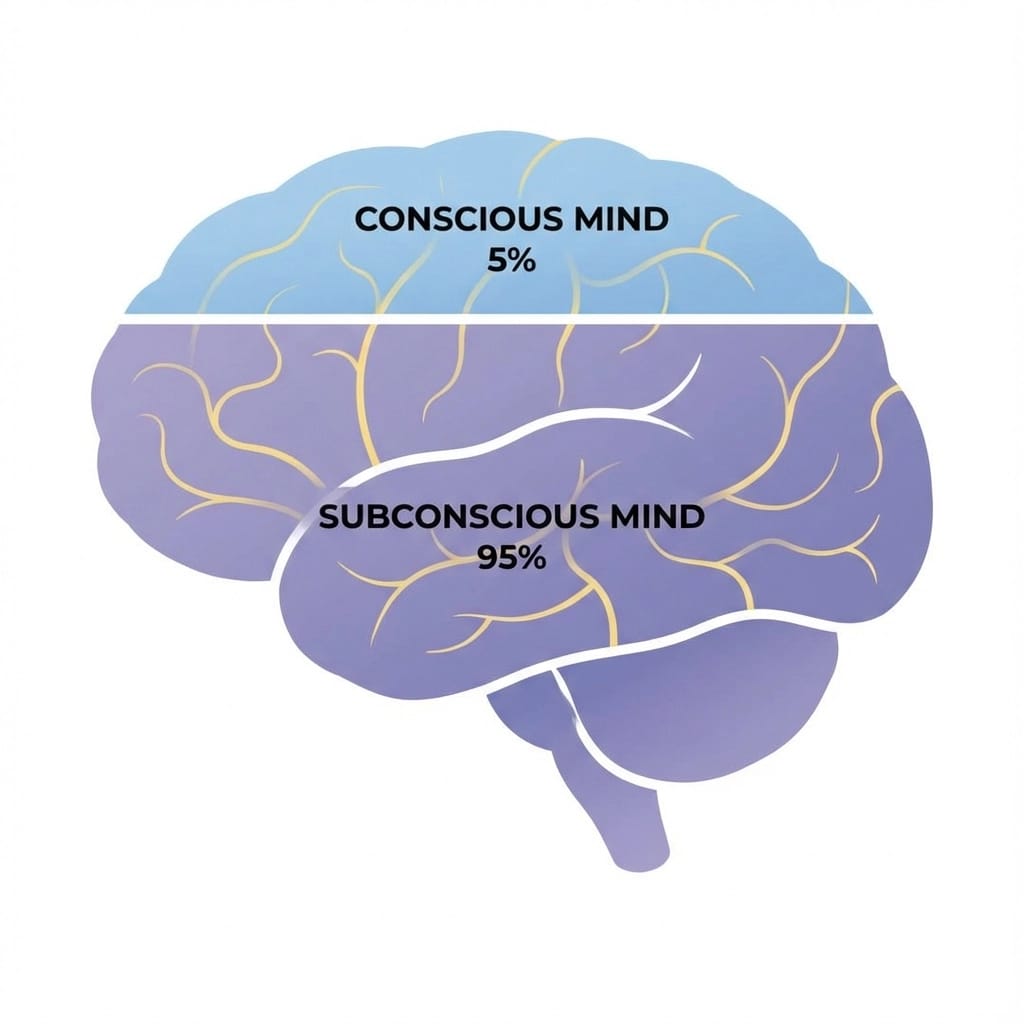
Traditional diets operate on a simple but flawed premise: if you can just control your conscious mind long enough, you'll lose weight and keep it off. But here's the problem with that logic: your conscious mind only controls about 5% of your daily decisions. The other 95%? That's your subconscious running the show.
Think about it. When you mindlessly reach for that afternoon snack, or find yourself eating while stressed, or automatically order your usual comfort food: those aren't conscious decisions. They're automatic patterns stored deep in your subconscious mind.
What Science Actually Reveals About Hypnosis and Weight Loss
The research on hypnotherapy for weight loss tells a fascinating story that most people never hear. Unlike the dramatic claims you see in marketing, the real science shows something more nuanced: and ultimately more powerful.
A controlled study of patients with severe obesity found something remarkable: while basic hypnosis sessions didn't produce dramatically different results initially, those who habitually practiced self-hypnosis achieved significantly greater weight loss: an average of 21 pounds compared to 12 pounds in the control group. More importantly, they maintained better satiety control and reduced inflammation markers.
Another long-term study tracking participants for 18 months found that while everyone lost 2-3% of their body weight in the first three months, the hypnotherapy group lost an additional 8 pounds and: crucially: kept it off.
But here's where it gets interesting: the mechanism isn't mystical "subconscious rewiring." It's something far more practical and powerful.
How Your Brain Actually Changes Eating Patterns
Your eating habits live in the same part of your brain that controls breathing, heartbeat, and walking. These are what neuroscientists call automatic behavioral programs: complex sequences your brain runs without conscious thought.
When you smell fresh bread and suddenly crave carbs, that's not willpower failure. That's a program running: Smell → Memory → Emotional Response → Craving → Action.
Traditional diets try to interrupt this sequence at the final step: the action. That's like trying to stop a freight train by standing on the tracks. Hypnosis works differently. It goes upstream and modifies the program itself.
During hypnosis, your brain enters what researchers call a "heightened state of neuroplasticity." Think of it like your neural pathways becoming soft clay instead of hardened concrete. In this state, you can actually reshape those automatic eating programs.

The Three Types of Eating Programs That Control Your Weigh
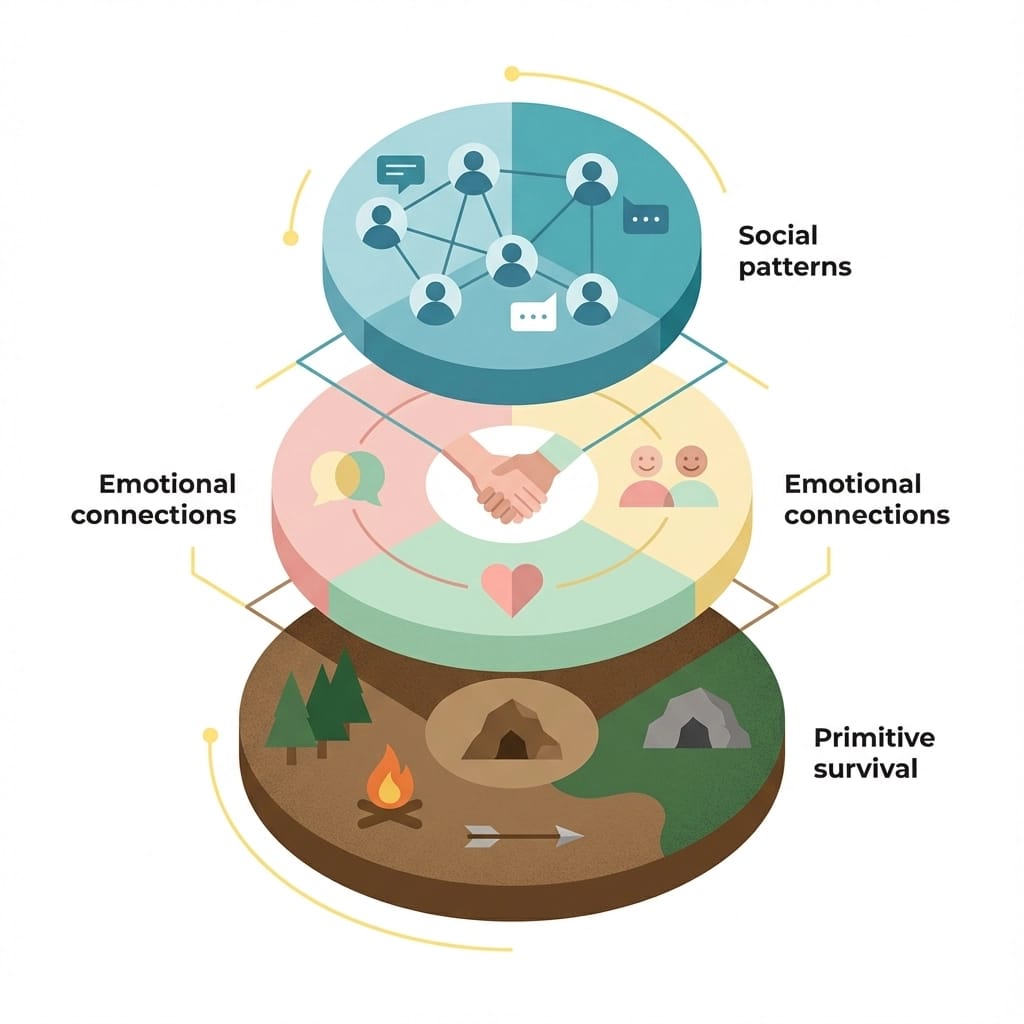
Most people have no idea there are three distinct types of eating programs running in their subconscious:
Survival Programs: These evolved to help humans survive famines. When you restrict calories severely, your brain activates ancient programs that slow metabolism, increase hunger hormones, and create intense cravings for high-calorie foods. This is why 95% of diets fail: you're literally fighting millions of years of evolution.
Emotional Programs: These link specific emotions to specific foods. Stress = ice cream. Boredom = chips. Celebration = cake. These programs often form in childhood and can run for decades without conscious awareness.
Social Programs: These govern how you eat around others, what you consider "normal" portion sizes, and when you feel permission to eat. If you grew up in a family where love was expressed through food, your brain may have learned: Food = Love = Safety.
The beauty of hypnosis is that it can identify and modify all three types of programs simultaneously.
Why Hypnosis Works When Diets Don't
Here's a scenario that might sound familiar: You start a new diet Monday morning, full of determination. By Wednesday, you're calculating how many calories are in that cookie. By Friday, you've given up entirely and promised to "start fresh Monday."
This isn't a character flaw: it's predictable neuroscience.
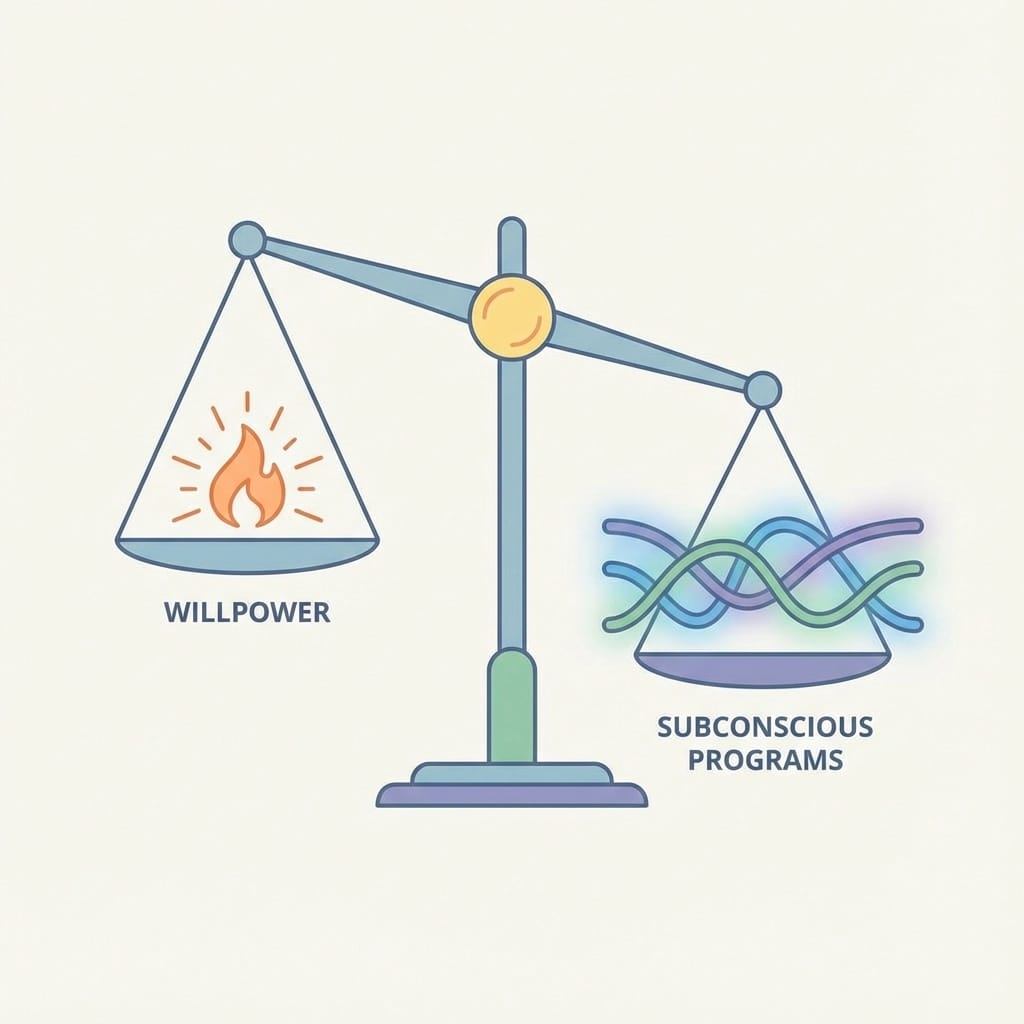
Conscious willpower operates like a muscle. It gets fatigued with use. Your subconscious programs, however, never get tired. They can run 24/7 for decades without breaking down.
When you use hypnosis for weight loss, you're not relying on willpower. You're actually reprogramming those automatic responses. Instead of fighting your subconscious, you're making it your ally.
A client recently told me: "For the first time in my life, I don't want the foods that used to trigger me. It's not that I'm restricting myself: the desire just isn't there anymore."
This is what genuine subconscious change looks like.
The Real Process of Mental Weight Loss
Effective weight loss hypnosis doesn't work through magic thinking or positive affirmations. It works through systematic behavioral modification at the subconscious level.
The process typically involves three phases:
Phase 1: Pattern Recognition
First, we identify your specific eating programs. What triggers emotional eating? What situations lead to overeating? What beliefs about food and weight are running in the background? This isn't therapy: it's detective work.
Phase 2: Program Installation
Using hypnosis, we install new automatic responses. Instead of reaching for food when stressed, your brain might automatically choose to take three deep breaths. Instead of cleaning your plate regardless of hunger, you might automatically stop eating when satisfied.
Phase 3: Integration
This is where the magic happens. The new programs need time to strengthen and become your new default patterns. This is why consistency matters more than intensity: practicing self-hypnosis regularly creates lasting change.
When Hypnosis Works Best (And When It Doesn't)
Here's what the research clearly shows: hypnosis works best as part of a comprehensive approach, not a standalone solution.
The most successful outcomes occur when people combine hypnosis with basic lifestyle changes: not extreme dieting, but reasonable adjustments to nutrition and activity levels.
Hypnosis tends to be most effective for people who:
Have struggled with emotional eating patterns
Find themselves eating without conscious awareness
Have tried multiple diets but struggle with maintenance
Want to change their relationship with food long-term
It's less effective for people expecting immediate dramatic results or those unwilling to make any lifestyle changes.
What to Actually Expect from Weight Loss Hypnosis
Let's set realistic expectations based on actual research, not marketing hype.
Most people notice changes in their eating patterns within 2-4 weeks of consistent practice.
This might look like:
Naturally smaller portions without effort
Reduced cravings for trigger foods
Less emotional eating during stress
Increased awareness of hunger and fullness cues
Weight loss typically follows these behavioral changes, usually 1-2 pounds per week for those who need to lose weight. The key difference from traditional dieting is that these changes feel natural and sustainable rather than forced.
The real transformation often takes 3-6 months. This isn't because hypnosis is slow: it's because lasting change happens gradually. Your brain needs time to solidify new neural pathways and make them stronger than the old ones.
Taking Action: Your Next Steps
If you're ready to try a different approach to weight loss: one that works with your mind instead of against it: here's how to get started:
Start with awareness. For the next week, simply notice when you eat without conscious intention. No judgment, just observation.
This begins to activate your conscious mind around food choices.
Consider professional guidance. While self-hypnosis apps exist, working with an experienced hypnotherapist can accelerate results and ensure you're addressing your specific patterns effectively
Set process goals, not just outcome goals. Instead of "I want to lose 30 pounds," try "I want to eat mindfully and honor my body's hunger cues." The weight loss becomes a natural byproduct.

The truth about weight loss hypnosis is both simpler and more complex than the marketing suggests. It's not magic, but it is powerful. It's not instant, but it can be permanent. And it's not about willpower: it's about working smarter, not harder.
Your subconscious mind has been running programs for years, maybe decades. With the right approach, you can finally give it a software update.
The question isn't whether hypnosis can help you lose weight. The research shows it can. The question is: are you ready to stop fighting your mind and start working with it instead?
If you're tired of the diet cycle and ready to explore a different approach, hypnotherapy might be the missing piece in your weight loss journey. Because the most sustainable changes aren't the ones you force: they're the ones that feel natural, automatic, and aligned with who you're becoming.
Written by: Rosario A. Zaragoza, MLS & PP
“If you don't speak, you would never go forward.”
Written exclusively for Master Hypnotist and Complete Mind Therapist Chuck DeBroder and Lightning Hypnosis ⚡
Consultation here: Book a Call Now
or call +1-915-203-3007 and let's chat.