
- Lightning-Hypnosis
Understanding How Hypnosis May Affect Sleep Patterns and Insomnia Recovery
Sleep difficulties are often influenced by a combination of stress, mental overstimulation, irregular sleep habits, and disrupted sleep conditioning patterns. Because of this, many people exploring non-medication sleep support eventually ask whether hypnosis can help improve sleep quality or even address long-term insomnia symptoms directly.
Interest in hypnosis for insomnia has increased in recent years as more individuals look for natural insomnia management approaches outside traditional sleep medication use.
Sleep hypnotherapy generally focuses on guiding the brain into a deeply relaxed mental state where attention, stress responses, and behavioral patterns may become more receptive to calming suggestions.
Current insomnia research studies show mixed but growing interest in how hypnosis may influence chronic insomnia treatment, sleep anxiety reduction, and overall sleep quality improvement.
While hypnosis does not universally cure insomnia, research continues examining whether brain relaxation techniques and hypnotic suggestion may help support better long-term sleep regulation in certain individuals.
1. What Hypnosis Actually Does During Sleep Therapy
Sleep hypnotherapy is designed to guide the brain into a deeply relaxed and highly focused mental state where attention becomes less reactive to external distraction and internal stress. During hypnosis for insomnia, the goal is not unconsciousness or forced sleep, but rather helping the mind reduce excessive alertness and emotional activation that may interfere with normal sleep patterns.
Many guided hypnosis for sleep approaches focus on calming mental overstimulation, reducing sleep-related anxiety, and improving sleep behavior conditioning through repeated relaxation-based suggestion techniques.
How sleep hypnotherapy affects mental relaxation
Hypnotic relaxation techniques often encourage slower breathing, reduced physical tension, and calmer mental focus. These brain relaxation techniques may help reduce the heightened mental activity commonly associated with difficulty falling asleep or maintaining sleep consistency.
Some individuals experiencing chronic insomnia also report racing thoughts, hypervigilance, or excessive nighttime awareness. Relaxation therapy for sleep attempts to reduce these patterns by shifting attention away from stress-driven mental stimulation before bedtime.
How hypnosis may influence sleep behavior conditioning
Behavioral sleep therapy often focuses on changing negative mental associations connected to bedtime and sleep difficulty. Sleep-focused hypnotherapy may support this process by reinforcing calming mental routines and reducing conditioned stress responses linked to nighttime wakefulness.
Over time, repeated hypnotic suggestion may help strengthen healthier bedtime expectations and support more stable natural insomnia management routines in certain individuals.
2. What Research Says About Hypnosis for Insomnia
Current insomnia research studies show mixed but increasingly positive interest in how hypnosis for insomnia may affect sleep quality improvement in certain individuals. Researchers continue studying whether hypnotic suggestion, relaxation techniques, and guided mental conditioning can support better sleep consistency, reduced nighttime arousal, and improved long-term sleep regulation.
While hypnosis does not guarantee results for every person with chronic insomnia treatment needs, several studies suggest that sleep hypnotherapy may help some individuals improve relaxation and reduce sleep-related mental stress when combined with broader behavioral approaches.
Findings commonly discussed in insomnia research studies
Research involving sleep-focused hypnotherapy and behavioral sleep therapy has explored several possible sleep-related benefits associated with hypnosis techniques.
- Reduced Sleep Onset Time: Some studies suggest hypnosis may help certain individuals fall asleep more quickly.
- Improved Relaxation Response: Brain relaxation techniques used during hypnosis may reduce nighttime mental overstimulation.
- Better Sleep Quality Improvement: Certain participants report deeper or more restful sleep patterns after guided hypnosis for sleep sessions.
- Reduced Sleep Anxiety: Sleep anxiety reduction may help decrease fear and frustration associated with chronic insomnia.
- Support for Non-Medication Sleep Support: Hypnosis is often explored as part of broader natural insomnia management strategies.
- Variable Results Between Individuals: Research also shows that hypnotic responsiveness differs significantly from person to person, which affects overall outcomes.
3. How Hypnosis May Support Better Sleep Habits
Many sleep difficulties are reinforced by repeated mental and behavioral patterns that keep the brain alert at night, even when the body feels tired. Sleep-focused hypnotherapy often aims to interrupt these patterns by helping individuals create calmer bedtime associations and more stable nighttime routines over time.
Rather than acting as a direct medical cure, hypnosis for insomnia is more commonly used to support behavioral and psychological changes connected to long-term sleep improvement. This is one reason many natural insomnia management approaches combine hypnosis with broader behavioral sleep therapy techniques.
How guided hypnosis for sleep helps calm nighttime mental activity
People experiencing chronic insomnia often describe excessive nighttime thinking, mental overstimulation, or difficulty mentally “switching off” before sleep. Guided hypnosis for sleep commonly uses repetitive calming suggestions and visualization techniques designed to reduce this heightened mental activity.
These relaxation-based methods may help the brain transition more gradually into a calmer state that supports better sleep readiness and sleep behavior conditioning.
Why reducing sleep anxiety may improve sleep consistency
Repeated sleep struggles can sometimes create anxiety around bedtime itself. Over time, the brain may begin associating the bed or nighttime environment with frustration, alertness, or fear of not sleeping properly.
Sleep anxiety reduction techniques used in sleep hypnotherapy may help weaken these negative mental associations and support more stable, natural sleep responses during the sleep recovery process.
4. Why Hypnosis Is Usually Combined With Other Sleep Approaches
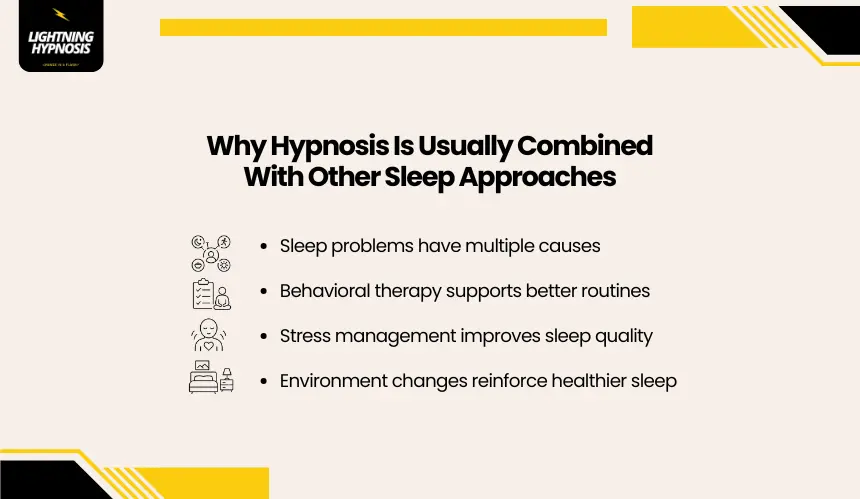
Most sleep specialists do not view hypnosis as a standalone solution for every case of chronic insomnia treatment. Sleep problems are often influenced by multiple physical, psychological, and behavioral factors at the same time, which is why broader treatment strategies are commonly recommended alongside hypnosis for insomnia.
Because of this, sleep hypnotherapy is frequently combined with behavioral sleep therapy, healthy sleep routines, stress management strategies, and other non-medication sleep support methods designed to improve long-term sleep regulation more comprehensively.
Common approaches are often combined with sleep hypnotherapy
Many natural insomnia management plans use hypnosis alongside other sleep-focused strategies that support healthier long-term sleep behavior conditioning.
- Behavioral Sleep Therapy: Helps identify habits and thought patterns that reinforce poor sleep routines.
- Healthy Bedtime Scheduling: Consistent sleep timing may support stronger sleep behavior conditioning and circadian stability.
- Relaxation Therapy for Sleep: Breathing exercises and calming routines may improve mental relaxation before bedtime.
- Stress Management Techniques: Reducing chronic stress often helps improve overall sleep quality.
- Non-Medication Sleep Support: Many people combine hypnosis with natural sleep-focused recovery approaches rather than relying entirely on medication.
- Sleep Environment Adjustments: Limiting noise, light exposure, and nighttime stimulation may help reinforce healthier sleep patterns.
Frequently Asked Questions
Can hypnosis cure insomnia permanently?
Current insomnia research studies do not show that hypnosis cures insomnia works permanently for every individual. Sleep hypnotherapy may help improve sleep quality and reduce sleep-related stress in some cases, but results vary depending on underlying sleep conditions and behavioral factors.
Is hypnosis for insomnia considered medically safe?
Guided hypnosis for sleep is generally considered a non-invasive and non-medication sleep support approach when performed by trained professionals. However, it is usually viewed as a supportive therapy rather than a guaranteed standalone chronic insomnia treatment.
How does sleep hypnotherapy differ from regular meditation?
Sleep hypnotherapy typically uses guided suggestion and focused mental conditioning techniques aimed specifically at influencing sleep behavior, conditioning, and relaxation responses. Meditation usually focuses more broadly on mindfulness, awareness, and general stress reduction.
Why do some people respond better to hypnosis than others?
Research suggests that hypnotic responsiveness varies naturally between individuals. Factors such as concentration ability, stress levels, mental openness, and existing sleep anxiety reduction needs may influence how effective hypnosis feels for different people.
Can hypnosis replace behavioral sleep therapy?
Many sleep professionals combine hypnosis with behavioral sleep therapy rather than using hypnosis alone. Behavioral approaches often address long-term sleep habits, routines, and thought patterns that contribute to chronic insomnia treatment needs.
Does hypnosis work immediately for sleep problems?
Some individuals report faster relaxation during early sessions, while others require repeated sleep-focused hypnotherapy sessions before noticing consistent sleep quality improvement. Long-term natural insomnia management usually depends on multiple sleep-related behavioral changes over time.