
- Lightning Hypnosis
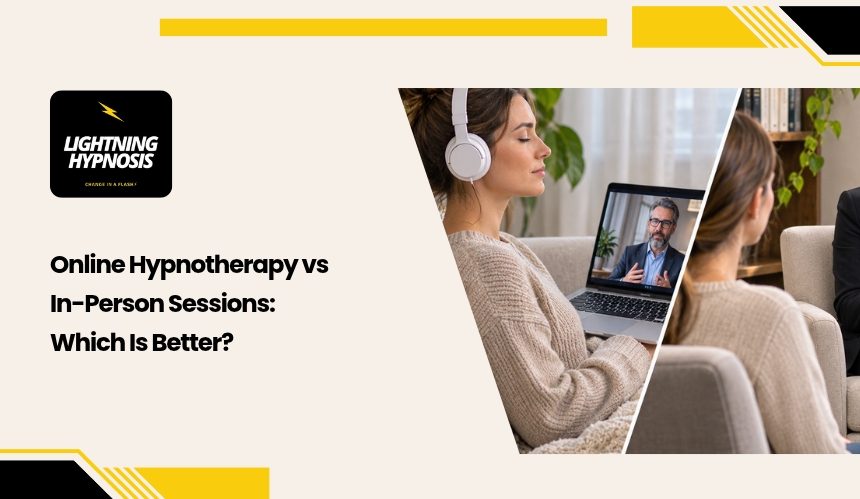
Online Hypnotherapy vs In-Person Sessions: Which Is Better?
Key Takeaways
|
Choosing between online hypnotherapy and in-person sessions often comes down to one question: Does the format affect the results? While both approaches follow the same therapeutic principles, factors such as your treatment goals, home environment, therapist interaction, and personal preferences can influence which option is the better fit.
Understanding these differences helps you make a confident, evidence-based decision instead of relying on assumptions. This guide compares both formats to help you determine which approach best matches your needs.
How Online and In-Person Hypnotherapy Differ
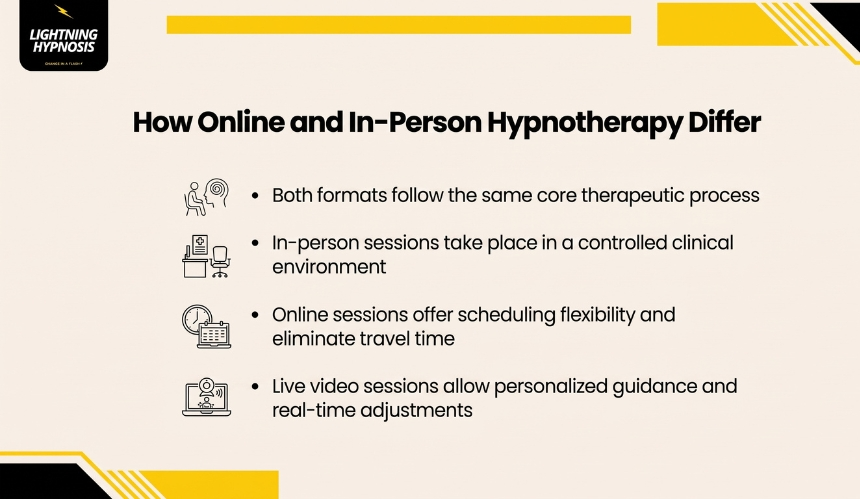
Both online and in-person hypnotherapy follow the same core therapeutic process. A qualified hypnotherapist begins by understanding your goals, guides you into a focused state of relaxation through hypnotic induction, delivers personalized therapeutic suggestions, and concludes with a discussion of your experience and next steps. The treatment approach remains the same regardless of where the session takes place.
The primary difference lies in the setting and delivery. In-person sessions take place in a controlled clinical environment with minimal distractions, while online hypnotherapy is conducted through a secure video platform from your chosen location. Online sessions offer greater flexibility, eliminate travel time, and provide access to therapists outside your local area, but they also depend on a quiet environment and a reliable internet connection.
It’s also important to distinguish live online hypnotherapy from hypnosis apps or prerecorded recordings. A live session allows the therapist to observe your responses, adjust techniques in real time, and tailor the experience to your specific goals. Recorded content may support relaxation or self-hypnosis practice, but it cannot provide the individualized guidance or therapeutic interaction of a one-to-one session.
Is Online Hypnotherapy as Effective as In-Person?
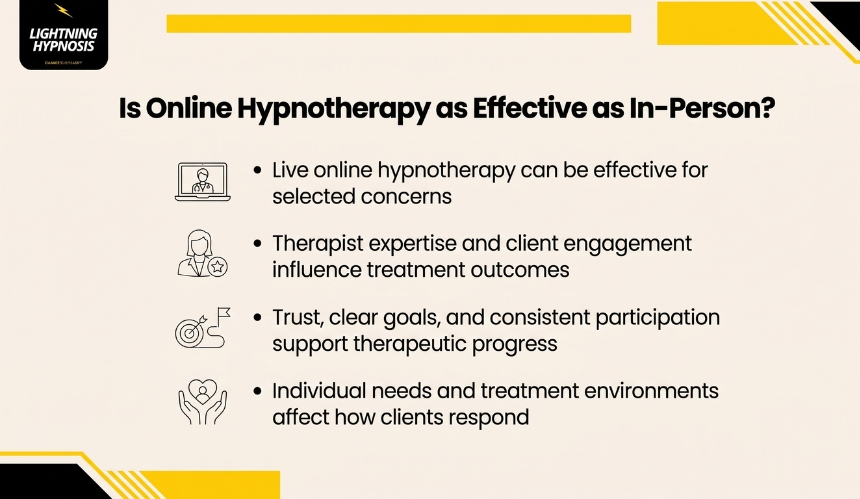
Current evidence suggests that online hypnotherapy can be effective for many people when delivered by a qualified practitioner through live video sessions. However, effectiveness depends less on the delivery format and more on factors such as the therapist’s expertise, the client’s engagement, and whether hypnotherapy is appropriate for the individual’s goals.
What Current Research Suggests
Research into remote hypnotherapy is promising, but the evidence remains limited and condition-specific. A 2023 review published in the International Journal of Clinical and Experimental Hypnosis found that video-based hypnotherapy appears acceptable to patients and may expand access to treatment. However, the authors also emphasized the continued need for face-to-face options and further comparative research.
One study of gut-focused hypnotherapy for irritable bowel syndrome found that 65% of patients receiving treatment through Skype achieved the defined clinical response, compared with 76% receiving face-to-face treatment. Both delivery groups improved across other measured outcomes, suggesting that remote hypnotherapy can be a viable alternative without proving that the formats are clinically equivalent.
A separate randomized controlled trial on online hypnosis for migraine involving 43 patients found that an online hypnosis intervention reduced headache-related disability, pain catastrophizing, and migraine duration. However, it did not produce significant between-group differences in migraine frequency or severity.
Overall, current findings support online hypnosis as a potentially effective option for selected concerns, but they do not establish that it is universally equal or superior to in-person hypnotherapy.
What Influences Results More Than Location
Several factors have a greater impact on treatment outcomes than whether the session takes place online or in person:
- The hypnotherapist’s qualifications, experience, and treatment approach
- A strong therapeutic rapport built on trust and open communication
- Clear treatment goals tailored to the individual’s needs
- The client’s willingness to engage with the therapeutic process
- A distraction-free environment that supports concentration
- Consistent attendance and completion of the recommended treatment plan
When these factors are present, many clients can achieve meaningful progress regardless of the session format.
Why Results Differ Between Individuals
People respond to hypnotherapy differently because hypnosis relies on individual cognitive and psychological factors rather than a standardized physiological response. Some individuals concentrate more effectively in the comfort of their own home, while others benefit from the structured atmosphere of a therapist’s office.
The nature of the concern also plays a role. A straightforward goal, such as confidence building or smoking cessation, may be equally suited to either format, whereas clients with more complex therapeutic needs may prefer the additional structure and clinical environment offered by in-person sessions. For this reason, the most effective choice is the one that best aligns with your circumstances, comfort level, and treatment objectives.
Benefits and Limitations of Each Hypnotherapy Format
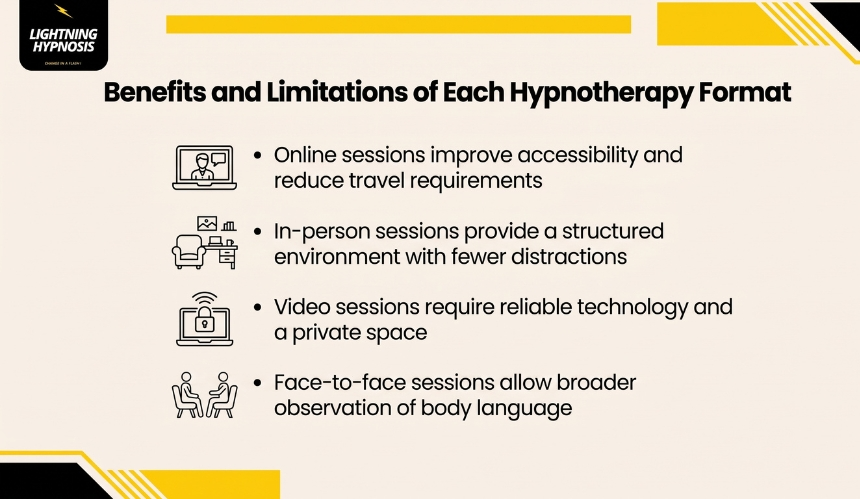
Both online and in-person hypnotherapy offer distinct advantages, but neither is the best choice for every situation. Comparing practical factors such as accessibility, environment, therapist interaction, and cost helps determine which format is likely to provide the most effective treatment experience for your circumstances.
Factor | Online Hypnotherapy | In-Person Hypnotherapy |
Accessibility | Attend sessions from any location with internet access | Limited to local clinics or travel distance |
Convenience | No commuting and greater scheduling flexibility | Requires travel and fixed appointment attendance |
Treatment Environment | Familiar home setting | Controlled clinical environment |
Privacy | Depends on having a quiet, private space at home | Private consultation room managed by the therapist |
Potential Distractions | Household interruptions or technology issues may affect focus | Fewer external distractions during treatment |
Therapist Observation | Visual and verbal cues through video | Full observation of posture, body language, and physical responses |
Technical Requirements | Stable internet connection and suitable device required | No technology needed during the session |
Cost Considerations | May reduce travel and related expenses | May involve transportation and parking costs in addition to session fees |
Convenience, Access, and Scheduling
Online hypnotherapy removes geographical barriers, allowing clients to work with qualified practitioners regardless of location. This can be particularly valuable for people living in rural areas, those with mobility limitations, frequent travelers, or individuals seeking a therapist with expertise that is not available locally. Eliminating travel time can also make it easier to attend sessions consistently.
In-person appointments may be more practical for individuals who already have access to experienced local practitioners and prefer separating therapy from their home environment. For some clients, visiting a dedicated clinic creates a structured routine that supports regular attendance.
Comfort, Privacy, and Distractions
The treatment environment can influence how easily a person relaxes and maintains focused attention during hypnosis. Some individuals feel more comfortable discussing personal concerns from home, where familiar surroundings reduce anxiety before the session begins.
Others achieve better concentration in a therapist’s office because the environment is specifically designed for uninterrupted treatment. At home, background noise, family members, pets, phone notifications, or unexpected interruptions may reduce immersion if a private space has not been prepared beforehand.
Rapport, Body Language, and Therapist Presence
Building trust with the hypnotherapist remains essential regardless of the delivery format. Live video sessions allow therapists to observe facial expressions, breathing patterns, speech, and many behavioral cues while adjusting the session accordingly.
However, in-person sessions provide a broader view of posture, movement, and subtle nonverbal communication that may not always be visible through a camera. While this does not automatically make face-to-face treatment more effective, some therapists and clients prefer the additional observational context when addressing more complex therapeutic concerns.
Technology, Cost, and Continuity
Online hypnotherapy relies on a stable internet connection, functional audio and video equipment, and a secure communication platform. Most therapists establish a backup contact method before beginning treatment so sessions can continue safely if technical issues occur.
From a financial perspective, session fees may be similar across both formats, but online appointments often reduce indirect costs such as travel, fuel, parking, and time away from work. They also make it easier to continue treatment after relocating or while traveling, reducing interruptions that might otherwise delay therapeutic progress.
Online vs In-Person Hypnotherapy Safety Considerations
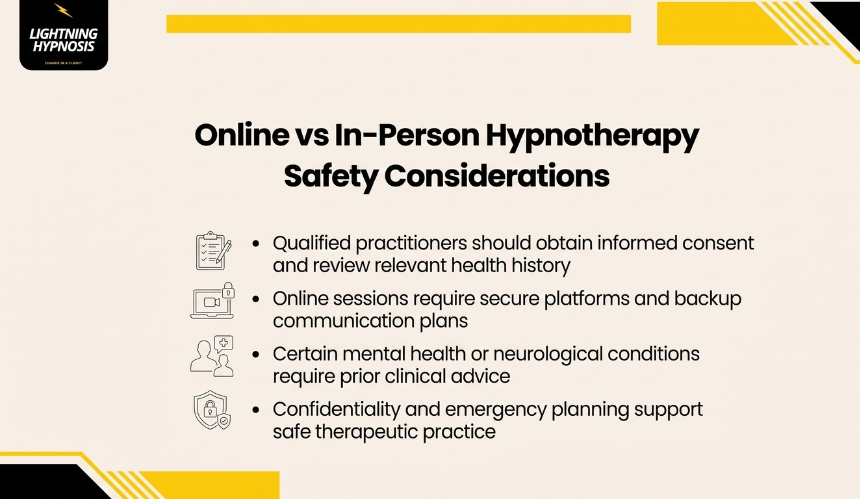
Safety depends more on appropriate clinical practice than on whether hypnotherapy is delivered online or in person. Before choosing a format, it’s important to understand how qualified practitioners manage risks, who may benefit from additional medical guidance, and what safeguards should be in place during treatment.
Is Online Hypnotherapy Safe?
Live online hypnotherapy is generally considered safe when conducted by a qualified practitioner using a secure video platform and appropriate clinical procedures. Throughout hypnosis, clients remain aware of their surroundings and retain the ability to communicate, decline suggestions, or end the session if they choose. Unlike common myths, hypnosis does not involve surrendering control or becoming unconscious.
Before treatment begins, the therapist should explain the process, obtain informed consent, discuss your goals, and review any relevant medical or psychological history. This initial screening helps determine whether hypnotherapy is suitable or whether another healthcare professional should be involved in your care.
What Happens If the Connection Drops?
A temporary internet interruption does not leave someone “stuck” in hypnosis. Hypnosis is a state of focused attention rather than unconsciousness, so clients naturally regain full awareness if communication stops or the session is interrupted.
Most experienced practitioners establish a contingency plan before the session begins. This typically includes reconnecting through the same platform, using a backup phone number if necessary, and ensuring the client is seated or reclining comfortably in a safe environment before hypnosis starts. Having these procedures in place allows sessions to resume smoothly if technical issues occur.
Who Should Seek Clinical Advice First?
Hypnotherapy is not a substitute for medical or psychiatric treatment, and it may not be appropriate for every individual. People experiencing psychosis, severe personality disorders, untreated serious mental health conditions, or unexplained neurological symptoms should consult an appropriate healthcare professional before beginning hypnotherapy.
Individuals receiving treatment for anxiety, depression, trauma, chronic pain, or other diagnosed conditions should also inform both their healthcare provider and hypnotherapist. In many cases, hypnotherapy is most effective when integrated into a broader treatment plan rather than used as a standalone intervention.
Privacy and Emergency Planning
Whether sessions are conducted online or in person, confidentiality should follow established professional and legal standards. For remote appointments, practitioners should use secure communication platforms, conduct sessions from a private setting, and clearly explain their privacy and data protection policies before treatment begins.
Online therapists should also have basic emergency procedures in place. These may include confirming the client’s location at the start of the session, keeping an emergency contact if clinically appropriate, and agreeing on a communication plan if the session is unexpectedly interrupted. These safeguards help ensure treatment remains both safe and professionally managed.
How to Choose the Better Hypnotherapy Option for You
The right choice depends on more than convenience alone. Your treatment goals, personal preferences, environment, and access to a qualified hypnotherapist all influence which format is likely to provide the best therapeutic experience.
Online Hypnotherapy May Be Better When
Online hypnotherapy is often a practical choice if you have a reliable internet connection, access to a quiet private space, and prefer receiving therapy from home. It can also be beneficial if mobility challenges, work commitments, or travel distance make attending a clinic difficult. Many clients choose online sessions to work with a specialist who is not available in their local area or to maintain continuity of care while relocating or traveling.
In-Person Hypnotherapy May Be Better When
In-person sessions may be more suitable if you find it easier to focus in a structured clinical setting or if your home environment is prone to interruptions. Some people also value face-to-face interaction and feel more comfortable discussing sensitive concerns with the therapist physically present.
For clients with more complex therapeutic needs, a practitioner may recommend in-person sessions when closer observation and a controlled treatment environment are considered beneficial.
Questions to Ask Before Booking
Choosing the right practitioner is often more important than choosing the session format. Before scheduling your first appointment, consider asking:
- What qualifications and professional training do you have in hypnotherapy?
- Have you worked with clients who have concerns similar to mine?
- Do you offer both online and in-person sessions?
- How do you protect confidentiality during online appointments?
- What is your procedure if a technical issue interrupts an online session?
- How many sessions are typically recommended for my goals?
- How will progress be assessed throughout treatment?
The answers can help you evaluate the practitioner’s experience, clinical approach, and whether their services align with your expectations.
A Simple Final Decision Rule
If both options are available, choose the format that allows you to participate consistently, feel comfortable discussing personal concerns, and work with a qualified hypnotherapist experienced in your treatment goals.
Online hypnotherapy is often the better choice when accessibility and flexibility improve your ability to attend sessions, while in-person treatment may be preferable if you benefit from a dedicated therapeutic environment with minimal distractions.
Ultimately, research suggests that treatment outcomes depend more on the quality of the therapeutic relationship, individualized care, and your engagement throughout the process than on whether the session takes place through a screen or in a therapist’s office.
Whether you prefer the flexibility of online sessions or the personal connection of in-person care, Lightning Hypnosis can help you choose the approach that best fits your goals. We provide professional hypnotherapy for anxiety throughout the Greater El Paso region, serving clients across West Texas and Southern New Mexico with personalized treatment designed around your individual needs.
Frequently Asked Questions
Do I need headphones, a webcam, or special equipment for online hypnotherapy?
Most live online sessions require only a computer, tablet, or smartphone with reliable audio, video, and internet access. Headphones are optional but can improve privacy and reduce background noise. Test your camera, microphone, connection, lighting, and device position beforehand so technical setup does not reduce your appointment time.
Can I attend an online hypnotherapy session from my car or workplace?
A parked car or private office may work for an initial consultation, but the hypnotic portion requires a stable, comfortable setting without interruptions. Never participate while driving, operating equipment, supervising children, or expecting workplace demands. Choose a location where you can remain seated, speak confidentially, and recover fully before resuming other activities.
How many sessions should I try before deciding whether hypnotherapy is working?
There is no standard session count because treatment length depends on the goal, symptom complexity, hypnotic responsiveness, and progress between appointments. Some clients notice changes after a few sessions, while structured clinical programs may involve four to eight visits. Agree on measurable outcomes and review progress regularly rather than judging success by relaxation alone.
Can I switch between online and in-person hypnotherapy during treatment?
A hybrid approach is generally possible when the practitioner offers both formats and considers each clinically suitable. Switching may accommodate travel, illness, privacy changes, or a preference for occasional office visits. Keep the same treatment objectives, practitioner, progress measures, and between-session exercises so the delivery change does not disrupt continuity.
Does insurance cover online and in-person hypnotherapy differently?
Coverage depends on your insurer, diagnosis, practitioner credentials, billing code, network status, and whether treatment is considered medically necessary. Some Medicare policies recognize hypnotherapy for specific covered diagnoses when an eligible professional provides it, but many services remain self-funded. Verify both the treatment and delivery format, then request written preauthorization before booking.