

- Lightning Hypnosis
What Happens During Your First Hypnotherapy Session?
Key Takeaways
|
Starting hypnotherapy often comes with one question: What will actually happen during my first session? Many people worry about losing control, saying the wrong thing, or not knowing what to expect before they even arrive. In reality, a first hypnotherapy appointment is a structured process focused on understanding your goals, guiding you into a relaxed state of focused attention, and determining the most appropriate therapeutic approach for your needs.
This guide explains each stage of the experience so you can approach your first session with realistic expectations and greater confidence.
Before the Hypnosis Begins: What Your Therapist Will Discuss
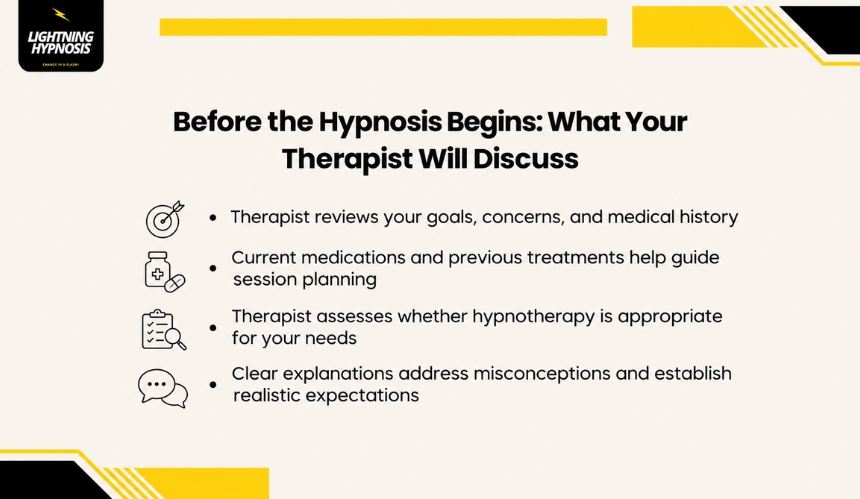
The first part of a hypnotherapy session is dedicated to assessment rather than hypnosis itself. Your hypnotherapist gathers information, clarifies your objectives, and develops an approach tailored to your circumstances. This consultation establishes the foundation for a focused and effective therapeutic session.
Understanding Your Goals, Concerns, and Medical History
Your session typically begins with a detailed conversation about the reason you sought hypnotherapy. Whether your objective is managing anxiety, breaking a habit, improving sleep, addressing fears, or enhancing performance, the therapist explores the challenges you’re experiencing, how long they’ve been present, and what outcomes you hope to achieve.
You may also be asked about your medical history, current medications, previous counseling or therapy, significant life events, and lifestyle factors that could influence treatment. This broader understanding helps identify potential contributing factors rather than focusing solely on symptoms. The information collected allows the therapist to customize therapeutic suggestions and techniques to your individual needs instead of relying on a standardized approach.
How the Therapist Determines Whether Hypnotherapy Is Appropriate
Not every concern is best addressed through hypnotherapy alone. During the consultation, the therapist evaluates whether your goals align with evidence-informed hypnotherapeutic methods or whether another healthcare professional should also be involved.
This assessment considers factors such as your current mental and physical health, the complexity of your concerns, and whether hypnotherapy is intended as a standalone intervention or part of a broader treatment plan. If necessary, the therapist may recommend collaboration with a physician, psychologist, or another qualified healthcare provider to ensure your care remains appropriate and comprehensive.
Setting Realistic Expectations and Answering Common Concerns
Before hypnosis begins, your therapist explains what the process involves and addresses misconceptions that often create unnecessary anxiety. Many first-time clients ask whether they will remain aware, lose control, reveal private information, or become “stuck” in hypnosis.
A qualified hypnotherapist explains that hypnosis is generally a state of focused attention and heightened concentration rather than unconsciousness. You remain capable of hearing instructions, communicating when needed, and ending the experience if you choose.
Establishing these expectations helps reduce uncertainty, builds trust between therapist and client, and creates an environment where you can participate in the session with greater confidence and openness.
What Actually Happens During the Hypnosis Session
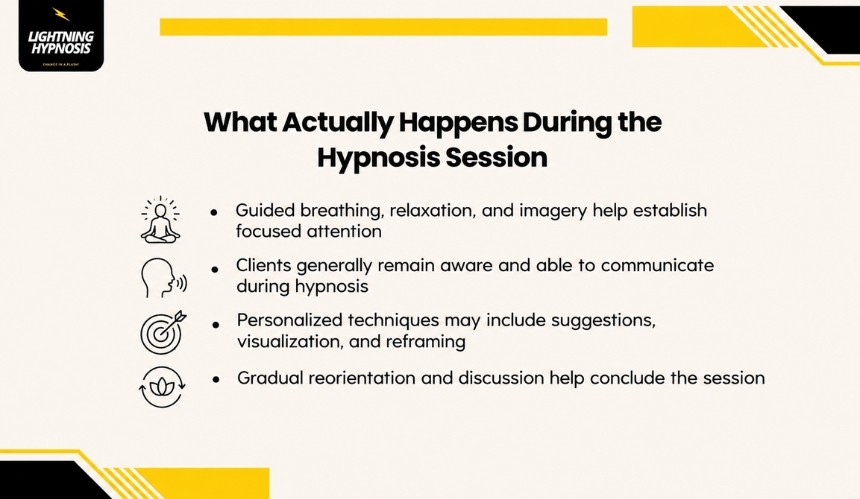
Once the consultation is complete, the therapeutic portion of the session begins. Rather than putting you to sleep or taking away your awareness, the hypnotherapist guides you into a state of focused attention where therapeutic techniques can be applied with fewer everyday mental distractions.
Guided Relaxation and Entering a Focused State
Your therapist will begin with a series of calming instructions designed to help your mind and body settle into a relaxed yet attentive state. This process, known as a hypnotic induction, may involve controlled breathing, progressive muscle relaxation, guided imagery, or focused attention exercises.
As your concentration deepens, external distractions become less prominent, allowing you to engage more fully with the therapist’s guidance. Most people remain aware of their surroundings throughout the experience and can hear, think, and respond if needed. The goal is not unconsciousness, but a heightened level of mental focus that supports therapeutic work.
For many first-time clients in El Paso, TX, where demanding work schedules, military service connected to Fort Bliss, and cross-border commuting can contribute to elevated stress levels, this structured relaxation often feels unfamiliar. The transition into a calm, focused state is frequently one of the most noticeable parts of the first session because it contrasts with the constant mental stimulation many people experience in daily life.
Therapeutic Techniques Your Hypnotherapist May Use
Once you reach a receptive state, the therapist applies techniques based on the goals established during your consultation. The methods vary depending on the issue being addressed rather than following a fixed script.
Common therapeutic approaches include:
- Positive therapeutic suggestions to reinforce desired thoughts or behaviors.
- Guided visualization to mentally rehearse healthier responses or future outcomes.
- Cognitive reframing to help reinterpret unhelpful beliefs or emotional reactions.
- Resource-building exercises that strengthen confidence, resilience, or emotional regulation.
Each intervention is tailored to your objectives. For example, someone seeking support for public speaking anxiety receives a different therapeutic approach than a client working on smoking cessation or stress management. This individualized process allows the session to target the underlying patterns influencing the presenting concern.
Returning to Full Awareness and Ending the Session
The session concludes with a gradual return to your normal level of alertness. Rather than abruptly ending hypnosis, the therapist guides you through a controlled reorientation process, often by asking you to focus on your breathing, become aware of your surroundings, and slowly open your eyes when ready.
Most people report feeling mentally refreshed, calm, or unusually clear-headed after the session, although individual experiences naturally differ.
Before you leave, the therapist may briefly discuss your experience, answer any immediate questions, and recommend practical steps or observations to consider before your next appointment, helping integrate the session into your ongoing therapeutic progress.
What You May Experience During and After Your First Session
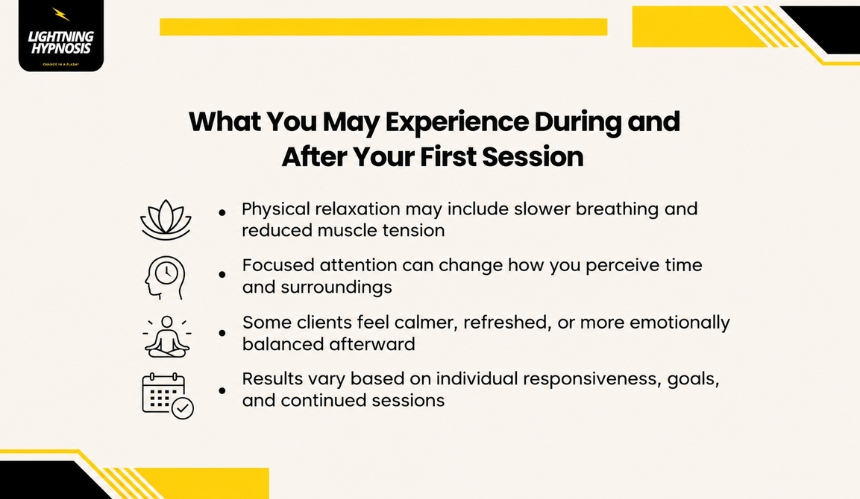
Every person’s response to hypnotherapy is different. Your level of relaxation, emotional response, and immediate results depend on factors such as your therapeutic goals, ability to concentrate, and individual responsiveness to hypnosis. Understanding these normal variations can help you interpret your first experience more accurately.
Sensations People Commonly Notice During Hypnosis
Hypnosis is often described as a state of deep relaxation combined with sustained mental awareness. While experiences vary, many people notice physical and mental sensations that indicate they are becoming more focused rather than less conscious.
Common experiences include:
- A feeling of physical heaviness or lightness in the limbs.
- Slower, deeper breathing and reduced muscle tension.
- Increased mental focus with fewer distracting thoughts.
- Altered perception of time, where the session feels shorter or longer than expected.
- A sense of calm while remaining aware of the therapist’s voice.
These responses are normal and do not determine whether the session was successful. Some individuals experience profound relaxation, while others feel only mildly different from their usual state. Both responses can support effective therapeutic work.
Immediate Thoughts, Emotions, or Mental Clarity Afterward
Once the session ends, many clients notice subtle mental or emotional changes instead of dramatic transformations. You may feel calmer, mentally refreshed, more emotionally balanced, or better able to reflect on situations without feeling overwhelmed.
For some, the session brings greater awareness of thought patterns or emotional triggers that were previously overlooked. Others simply leave feeling relaxed and clear-headed. These early responses reflect the beginning of the therapeutic process rather than the final outcome, particularly when the goal involves changing long-standing habits or emotional responses.
Why Results Vary From Person to Person
The effectiveness of a first hypnotherapy session depends on multiple interacting factors, not just the hypnosis itself. Individual responsiveness, the complexity of the presenting concern, therapeutic rapport, and the consistency of future sessions all influence progress.
Some clients notice meaningful changes after their initial appointment, particularly for issues involving stress reduction or relaxation. Others experience gradual improvement over several sessions as therapeutic suggestions are reinforced and integrated into everyday thinking and behavior. Measuring success by long-term progress rather than immediate dramatic change provides a more realistic understanding of how hypnotherapy works.
How to Get the Most From Your First Hypnotherapy Appointment
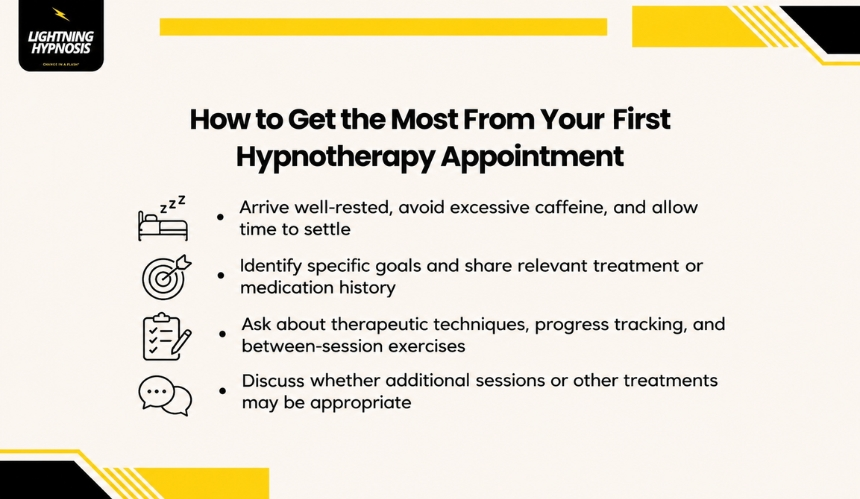
Your first session establishes the foundation for future progress. Preparing appropriately, asking informed questions, and understanding how treatment is planned can help you gain greater value from the experience and develop realistic expectations for long-term results.
How to Prepare Before You Arrive
A productive hypnotherapy session begins before you walk into the office. Arriving well-rested, avoiding excessive caffeine immediately beforehand, and allowing enough time to reach your appointment without rushing can make it easier to relax and focus during the session.
It is also helpful to think about the specific changes you want to achieve rather than only describing the problem. For example, instead of saying you want to “feel less stressed,” identify measurable goals such as improving sleep, reducing anxious thoughts, or becoming more confident in certain situations. This gives your therapist a clearer therapeutic direction.
If you’re seeking hypnotherapy for depression in El Paso, TX, preparing a brief timeline of your symptoms, previous treatments, and current medications can make the initial assessment more comprehensive.
This is particularly valuable because hypnotherapy is often integrated with broader mental health care rather than used as a replacement for evidence-based medical or psychological treatment.
Questions to Ask Your Hypnotherapist
Your first appointment is an opportunity to understand both the treatment process and your therapist’s approach. Asking thoughtful questions helps you make informed decisions and ensures your expectations align with the proposed treatment plan.
Consider asking questions such as:
- How will the sessions be tailored to my goals?
- What techniques do you typically use for my specific concern?
- How will progress be measured over time?
- Are there any exercises or strategies I should practice between sessions?
- Should hypnotherapy be combined with other forms of treatment in my situation?
For residents of El Paso, TX, it may also be helpful to ask whether the therapist has experience working with concerns common in the region, such as chronic stress, military family transitions associated with Fort Bliss, or bilingual communication needs. A therapist in El Paso familiar with these local circumstances may be better positioned to personalize treatment where appropriate.
Will You Need Additional Sessions?
While some people notice meaningful benefits after their first appointment, hypnotherapy is generally designed as a therapeutic process rather than a one-time intervention. The number of sessions depends on the nature of the concern, its duration, and how your mind responds to therapeutic suggestions.
Goals such as stress reduction or relaxation may improve relatively quickly, whereas changing deeply established behaviors, emotional patterns, or long-term habits often requires multiple sessions to reinforce new responses. At the end of your first appointment, your hypnotherapist will typically recommend whether continued treatment is appropriate and outline a plan based on your individual progress rather than a predetermined schedule.
Whether you’re preparing for your first session or ready to begin your journey toward lasting change, Lightning Hypnosis is here to help. We provide personalized hypnotherapy services for clients throughout the Greater El Paso region and surrounding communities, creating treatment plans tailored to your goals in a supportive, professional environment.
Contact Lightning Hypnosis today to schedule your first appointment and take the first step toward meaningful, lasting results.
Frequently Asked Questions
What if I cannot relax or my mind keeps wandering during hypnosis?
Difficulty relaxing does not mean hypnotherapy has failed. Hypnosis relies on focused attention, not a perfectly blank mind, so noticing distractions and returning to the therapist’s voice can still support the process. A practitioner can adjust the induction method, pacing, imagery, or breathing cues to match how you concentrate most naturally.
Is it normal to remember the entire hypnotherapy session?
Remembering most or all of a session is common because clinical hypnosis is a waking state of concentrated awareness, not sleep or sedation. Some details may feel less distinct when attention becomes deeply absorbed. Unexpected memory gaps should be discussed with the practitioner, especially if memory-focused or regression techniques were used.
Can I drive or go back to work after my appointment?
Most clients can resume ordinary activities after a routine session because hypnotherapy does not normally involve medication or anesthesia. However, deep relaxation or emotional processing may leave some people temporarily tired, light-headed, or distracted. Allow a few minutes to reorient, and avoid driving until you feel fully alert and steady.
Can hypnotherapy bring up memories that are inaccurate?
Hypnosis can increase confidence in a memory without proving that the memory is historically accurate. Highly suggestive questioning, regression work, and pressure to recover forgotten events can contribute to distorted or false recollections. Choose a practitioner who treats emerging memories cautiously and does not present hypnosis as a reliable fact-finding tool.
Should I stop medication or counseling before starting hypnotherapy?
Do not discontinue antidepressants, anxiety medication, psychotherapy, or other medical treatment unless the prescribing clinician advises it. Hypnotherapy is generally used as a complementary approach alongside established care. Tell both providers what treatments you receive so they can identify contraindications, coordinate goals, and monitor changes in symptoms or daily functioning.
Who should speak with a healthcare professional before trying hypnotherapy?
People with psychosis, schizophrenia, epilepsy, severe dissociation, or unstable mental health symptoms should seek medical guidance before booking. Suitability depends on the individual and the proposed technique. A responsible hypnotherapist should screen for risk factors and refer or collaborate with a licensed healthcare provider when additional clinical oversight is appropriate.