

- Lightning Hypnosis
How Many Hypnotherapy Sessions Do Most People Need?
Key Takeaways:
|
Many people considering hypnotherapy want to know how long the process will take and whether results can be achieved in just a few sessions. The answer varies because treatment plans are influenced by individual goals, the complexity of the issue, and how a person responds to hypnosis.
Understanding the factors that affect treatment length helps set realistic expectations. This article explains how many hypnotherapy sessions most people need and what determines the overall timeline.
What Is the Typical Number of Hypnotherapy Sessions for Most People?
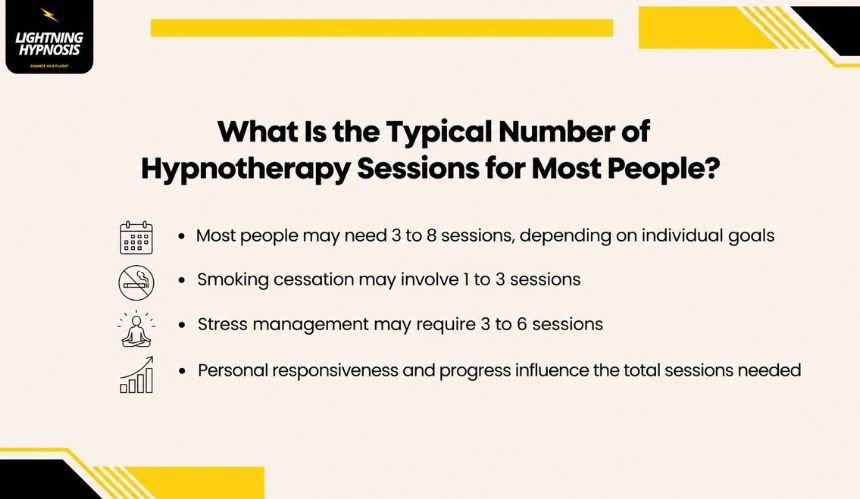
Most people require between 3 and 8 hypnotherapy sessions, although the exact number depends on the issue being addressed and the individual’s response to treatment. Some clients experience noticeable changes after a single session, while others benefit from a structured series of appointments.
Average Session Ranges for Common Goals
Session requirements often vary according to the objective. Goals involving simple habit changes or performance improvement may require fewer appointments, while emotional or behavioral concerns can involve a longer treatment plan.
General ranges commonly seen in practice include:
- Smoking cessation: 1 to 3 sessions
- Stress management: 3 to 6 sessions
- Confidence and performance goals: 2 to 5 sessions
- Anxiety-related concerns: 4 to 8 sessions
- Long-standing behavioral patterns: 6 sessions or more
These ranges are estimates rather than fixed rules. A qualified hypnotherapist typically adjusts the approach based on progress and client feedback.
Why Do Some People Notice Changes Sooner Than Others?
Response time differs because hypnosis is influenced by several individual factors. Personal suggestibility, consistency between appointments, and the nature of the presenting issue can all affect how quickly improvements occur.
People seeking support for a recent or clearly defined concern may notice results more quickly than those addressing patterns that have developed over many years. Motivation and active participation in the therapeutic process also influence outcomes.
Rather than focusing on a specific number of sessions, most hypnotherapists evaluate progress over time and modify the treatment plan according to the client’s needs and goals.
What Factors Affect How Many Sessions Someone May Need?
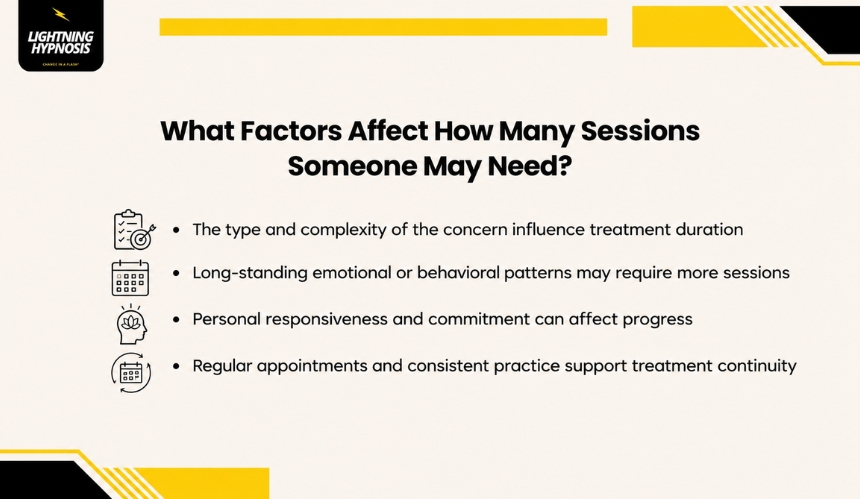
There is no fixed number of hypnotherapy sessions that applies to everyone. Treatment length is usually determined by the nature of the concern, individual characteristics, and how the sessions are scheduled.
1. The Type and Complexity of the Issue Being Addressed
The presenting concern is one of the main factors that influences the duration of hypnotherapy. A specific goal, such as reducing public speaking anxiety or addressing a particular habit, may require fewer sessions than concerns involving multiple triggers or long-standing emotional patterns.
Issues that have existed for many years or are connected to several life experiences often require a more gradual process. In some cases, hypnotherapy may also be used alongside other forms of care, which can affect the overall treatment timeline.
2. Personal Responsiveness and Commitment to the Process
People respond to hypnosis differently. Factors such as concentration, willingness to engage in the process, and adherence to recommendations between sessions can influence how quickly progress occurs.
Some hypnotherapists provide audio recordings, relaxation exercises, or self-hypnosis techniques for use between appointments. Consistent use of these tools may support the work being done during sessions, although individual results can vary.
3. Frequency and Consistency of Appointments
Session scheduling can also affect the pace of progress. Many practitioners recommend regular appointments because long gaps between sessions may interrupt continuity and make it more difficult to build on previous work.
Weekly or biweekly sessions are commonly used in many hypnotherapy practices, but the appropriate schedule depends on the client’s goals, availability, and the professional recommendations of the hypnotherapist. Treatment plans are often adjusted over time based on observed progress and changing needs.
How Session Requirements Differ Based on Individual Goals
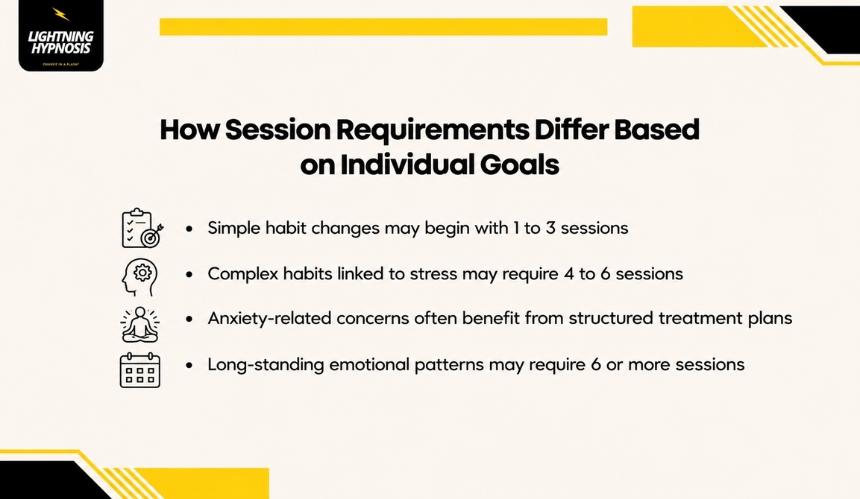
The number of hypnotherapy sessions usually changes according to the goal being treated. A narrow behavioral goal may need fewer appointments, while anxiety, stress, or long-established patterns often require a more structured plan.
Habit Change And Lifestyle Goals
Habit-based goals are usually easier to structure because the target behavior is specific. Smoking cessation, sleep routines, weight-related habits, and confidence work often allow the hypnotherapist to focus on clear triggers, repeated behaviors, and replacement responses.
For simpler habit goals, many people may start with 1 to 3 sessions. More layered habits, such as emotional eating or sleep disruption linked to stress, may require 4 to 6 sessions because the behavior is connected to both routine and emotional regulation.
Stress, Anxiety, And Emotional Concerns
Hypnotherapy for anxiety often requires more than one appointment because anxiety can involve physical symptoms, thought patterns, avoidance behaviors, and specific triggers. Because these factors may differ from one person to another, session requirements can vary considerably.
This does not mean every anxiety-related concern fits that timeline. Mild situational stress may respond to a shorter plan, while panic symptoms, social anxiety, or long-term worry patterns may need a broader treatment structure.
Hypnotherapy is often used to support relaxation, coping responses, and emotional regulation, and Mayo Clinic notes that hypnosis may help people cope with stress and anxiety, often as part of a wider treatment plan.
Long-Standing Patterns And Deeper Issues
Long-standing concerns usually need a longer timeline because the goal is not only symptom relief but pattern change. Repeated fears, persistent self-doubt, trauma-linked responses, or beliefs formed over many years may require several stages of work.
In these cases, 6 or more sessions may be more realistic, depending on the person’s response and the practitioner’s assessment. The treatment plan may need to address triggers, automatic reactions, emotional associations, and relapse prevention before progress feels stable in daily life.
How Will Someone Know When They Have Had Enough Hypnotherapy Sessions?
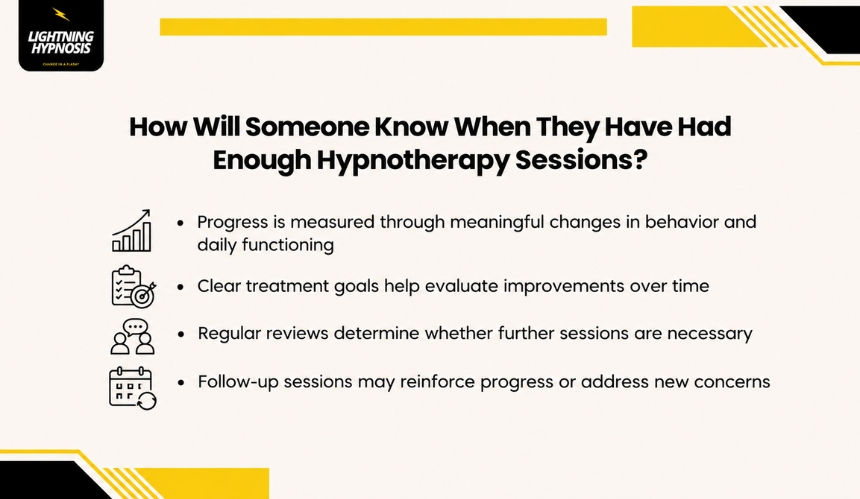
Hypnotherapy is typically goal-oriented rather than based on a predetermined number of appointments. Most hypnotherapists evaluate progress regularly and adjust the treatment plan according to whether the original objectives have been achieved.
Measuring Improvements and Desired Outcomes
Progress is usually assessed by looking at observable changes rather than simply counting sessions. For example, someone seeking help for smoking cessation may evaluate success by remaining tobacco-free, while a person addressing stress may measure improvements through reduced symptoms and better daily functioning.
Many practitioners encourage clients to identify specific goals at the beginning of treatment. These benchmarks make it easier to determine whether meaningful progress has occurred.
Reviewing Progress With the Hypnotherapist
Regular reviews allow both the client and hypnotherapist to discuss what has changed since previous appointments. If the desired results have been achieved, additional sessions may no longer be necessary.
In cases where progress has slowed or new concerns have emerged, the treatment plan can be modified. Some clients may complete treatment after only a few sessions, while others may benefit from extending the process to address remaining goals.
When Maintenance or Follow-Up Sessions May Be Helpful
Not everyone requires ongoing appointments after completing their initial treatment plan. However, some individuals choose occasional follow-up sessions to reinforce techniques learned during therapy or to address new stressors.
Maintenance visits are commonly scheduled only when needed rather than on a fixed, long-term basis. The frequency varies from person to person and depends on individual goals, lifestyle changes, and the recommendations of the hypnotherapist.
Looking for professional hypnotherapy support? Lightning Hypnosis provides hypnotherapy for anxiety, trauma, stress, habits, performance, mindset development, and emotional well-being.
Serving clients throughout the Greater El Paso region and Southern New Mexico, the practice offers personalized hypnotherapy and executive coaching designed to help individuals create lasting behavioral change.
Frequently Asked Questions
Can one hypnotherapy session be enough for a specific problem?
One hypnotherapy session may be enough for a narrow, clearly defined goal, such as preparing for a single event or interrupting a simple habit pattern. Broader concerns usually need follow-up because the hypnotherapist must observe how the subconscious response changes after real-life exposure.
What happens if hypnotherapy does not work after a few sessions?
Limited progress after a few sessions does not always mean hypnotherapy has failed. The approach may need adjustment, the goal may need to be refined, or another support method may be more suitable. A professional hypnotherapist should review response patterns and discuss whether to continue, pause, or refer.
Is online hypnotherapy as effective as in-person hypnotherapy?
Online hypnotherapy can work well when the client has a quiet space, stable internet, and the ability to focus without interruptions. The main requirement is not the room itself but the therapeutic process, comfort level, communication quality, and the client’s ability to enter a relaxed, responsive state.
Should hypnotherapy sessions be weekly or spaced farther apart?
Weekly sessions are commonly used when a client wants consistent momentum and structured reinforcement. Longer gaps may be suitable after progress has stabilized or when follow-up support is the main goal. The best schedule depends on symptom intensity, treatment goals, and how well changes are carried into daily life.
Can hypnotherapy be used with therapy, coaching, or medical treatment?
Hypnotherapy can often be used alongside counseling, coaching, or medical care when each service has a clear role. It may support relaxation, behavioral change, performance goals, and subconscious pattern work. Clients with diagnosed mental health conditions should coordinate care with qualified healthcare or mental health professionals.