
- Lightning-Hypnosis
Can Hypnotherapy Help With Anxiety? What the Research Says
Key Takeaways:
|
Anxiety can affect sleep, concentration, physical health, and daily functioning, leading many people to explore options beyond conventional treatment. Hypnotherapy is often discussed as a complementary approach, but questions remain about whether scientific evidence actually supports its use for anxiety relief.
This article reviews what current studies show, how hypnotherapy works, and the factors to consider before deciding whether it is an appropriate option for anxiety management.
Understanding Anxiety and Why People Seek Alternative Therapies
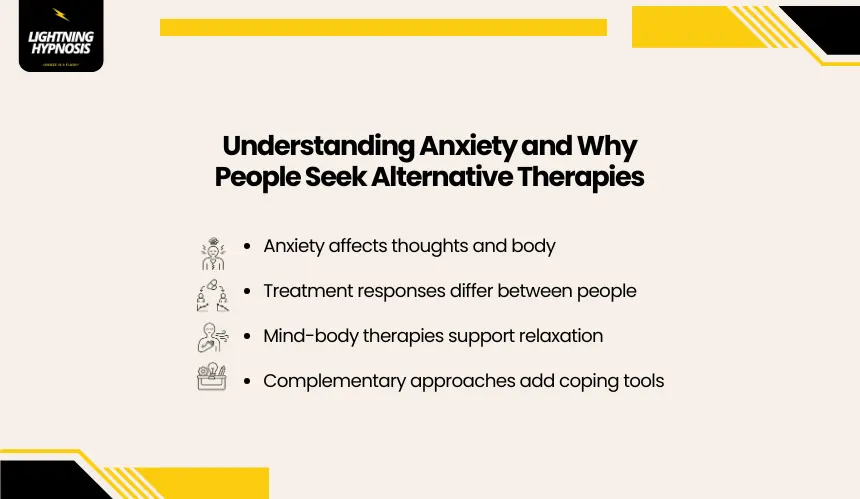
Anxiety disorders involve persistent fear, worry, or nervous system activation that interferes with daily activities. While many people benefit from established treatments, responses vary, which has increased interest in complementary approaches that target both psychological and physical symptoms.
Common Symptoms and Types of Anxiety Disorders
Anxiety can present differently depending on the condition involved. Generalized anxiety disorder often causes excessive and ongoing worry, while panic disorder produces sudden episodes of intense fear. Social anxiety disorder is characterized by fear of social situations, and specific phobias involve strong reactions to particular triggers.
Common symptoms may include:
- Persistent worry or racing thoughts
- Increased heart rate or muscle tension
- Difficulty sleeping
- Restlessness or irritability
- Trouble concentrating
- Gastrointestinal discomfort or other stress-related physical symptoms
These symptoms result from interactions between cognitive processes, emotional responses, and the body’s stress system.
Why Conventional Treatments Do Not Work the Same for Everyone
Evidence-based treatments such as cognitive behavioral therapy, medication, and lifestyle interventions remain the standard approach for anxiety management. However, treatment outcomes differ among individuals because anxiety severity, underlying causes, coexisting conditions, and personal preferences vary.
Some people experience partial symptom relief, while others may encounter medication side effects, limited access to therapy, or difficulty maintaining long-term treatment adherence. These differences often lead individuals to consider additional strategies that can be used alongside conventional care.
Growing Interest in Mind-Body Therapies for Anxiety Management
Mind-body therapies focus on the relationship between mental processes and physiological responses. Techniques such as meditation, mindfulness, breathing exercises, biofeedback, and hypnotherapy aim to influence stress perception and promote relaxation.
Interest in these approaches has increased because anxiety frequently produces physical symptoms alongside emotional distress. Many individuals seek interventions that address both components simultaneously and provide additional tools for managing stress outside traditional treatment settings.
How Hypnotherapy Works for Anxiety
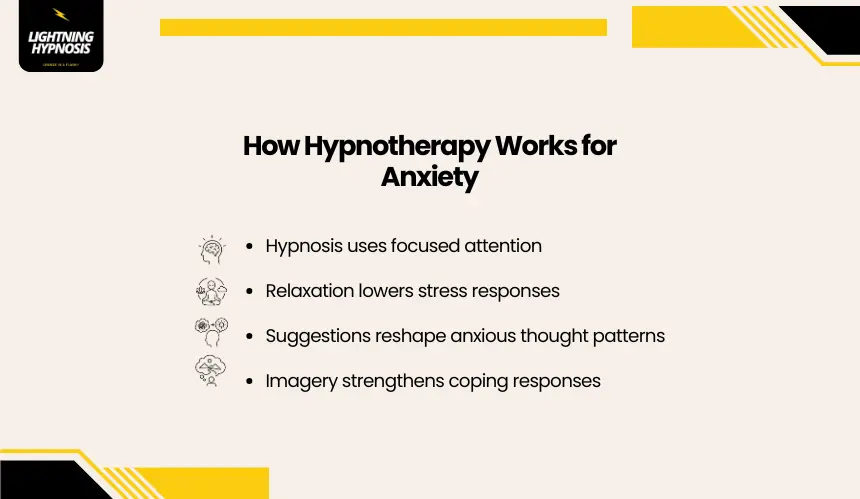
Hypnotherapy is designed to alter patterns of attention, perception, and response while the individual remains awake and aware. In anxiety treatment, the objective is not to suppress emotions but to reduce automatic stress reactions and modify maladaptive cognitive associations that contribute to anxious responses.
What Happens During a Hypnotherapy Session?
A clinical hypnotherapy session typically begins with an assessment of symptoms, triggers, and treatment goals. The therapist then guides the individual into a state of focused attention through techniques such as controlled breathing, progressive muscle relaxation, imagery, or verbal repetition.
During this state, external distractions are reduced, and attention becomes more concentrated. Contrary to common misconceptions, hypnosis does not involve loss of consciousness or loss of control. Individuals remain able to hear, think, and respond throughout the session.
Depending on the treatment approach, sessions may include visualization exercises, cognitive reframing, relaxation training, or suggestions aimed at changing anxiety-related responses.
The Role of Relaxation, Suggestion, and Focused Attention
Hypnosis is associated with increased concentration and reduced sensory interference. This focused state allows therapeutic suggestions to be processed with fewer competing thoughts, which may be particularly relevant in people who experience repetitive worry or heightened stress sensitivity.
Several mechanisms are involved:
- Relaxation techniques may decrease sympathetic nervous system activity associated with the fight-or-flight response.
- Guided suggestions can encourage alternative interpretations of feared situations.
- Mental imagery may strengthen coping responses before exposure to real-life stressors.
- Focused attention can interrupt cycles of rumination and excessive anticipatory thinking.
These processes are intended to influence learned emotional reactions rather than eliminate anxiety entirely.
How Hypnotherapy May Affect Stress Responses and Thought Patterns
Research suggests that hypnosis may influence both cognitive and physiological components involved in anxiety. Functional imaging studies have shown that hypnotic states are associated with changes in brain regions involved in attention regulation, emotional processing, and self-awareness.
From a psychological perspective, hypnotherapy attempts to weaken conditioned associations between triggers and anxiety responses. For example, a person who automatically associates public speaking with danger may gradually develop a different internal response through repeated therapeutic suggestions and visualization exercises.
Hypnotherapy may also support emotional regulation by reducing hyperarousal, decreasing perceived threat intensity, and promoting adaptive coping patterns. These effects are why hypnotherapy is often used as an adjunctive intervention alongside cognitive behavioral therapy, stress management techniques, or other evidence-based treatments.
What Research Says About Hypnotherapy for Anxiety
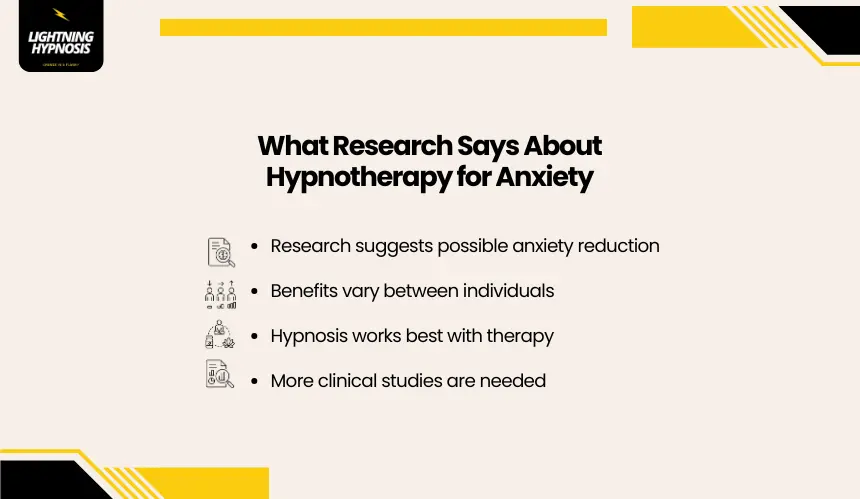
Research suggests that hypnotherapy may help reduce anxiety symptoms in some individuals, particularly when combined with established psychological treatments. Current evidence generally supports hypnotherapy as a complementary intervention rather than a replacement for standard mental health care.
What Do Clinical Studies and Reviews Show?
A 2019 meta-analysis published in the International Journal of Clinical and Experimental Hypnosis analyzed multiple studies on hypnosis and anxiety and found that hypnosis produced significantly greater anxiety reduction than control conditions. The analysis also reported stronger effects when hypnosis was combined with other therapeutic approaches.
More recently, a 2024 systematic review and meta-analysis published in Neuroscience & Biobehavioral Reviews reported beneficial effects of hypnosis across several health conditions, including anxiety-related outcomes. The authors noted that treatment effects varied depending on study quality and patient population.
Earlier evidence was more conservative. A 2007 systematic review published in the Australian and New Zealand Journal of Psychiatry concluded that available trials showed promising results, but the overall evidence base was limited by small sample sizes and inconsistent methodologies.
Where Have Anxiety-Related Benefits Been Observed?
Clinical studies have reported anxiety-related improvements in areas such as:
- Test anxiety
- Medical procedure anxiety
- Dental anxiety
- Stress-related emotional symptoms
A randomized controlled study involving medical students found that hypnosis reduced test anxiety more effectively than progressive muscle relaxation. Researchers also observed changes in attentional bias toward threatening information, which is a common cognitive characteristic in anxiety disorders.
Separate reviews examining medical procedures have shown that hypnosis may reduce distress and anticipatory anxiety before surgery and other interventions. These findings suggest that hypnosis may be particularly useful when anxiety is linked to identifiable triggers.
What Are the Current Research Limitations?
The existing evidence does not demonstrate that hypnotherapy is equally effective for all anxiety disorders. Many studies focus on situational anxiety rather than chronic conditions such as generalized anxiety disorder or panic disorder.
Researchers frequently cite several limitations:
- Small participant groups
- Differences in hypnosis techniques between studies
- Variation in practitioner experience
- Inconsistent outcome measurements
- Difficulty separating hypnosis from accompanying therapies
Overall, current research indicates that hypnotherapy has promising potential for anxiety management, especially when integrated with evidence-based approaches, but further large-scale clinical trials are still needed.
Who May Benefit Most From Hypnotherapy for Anxiety
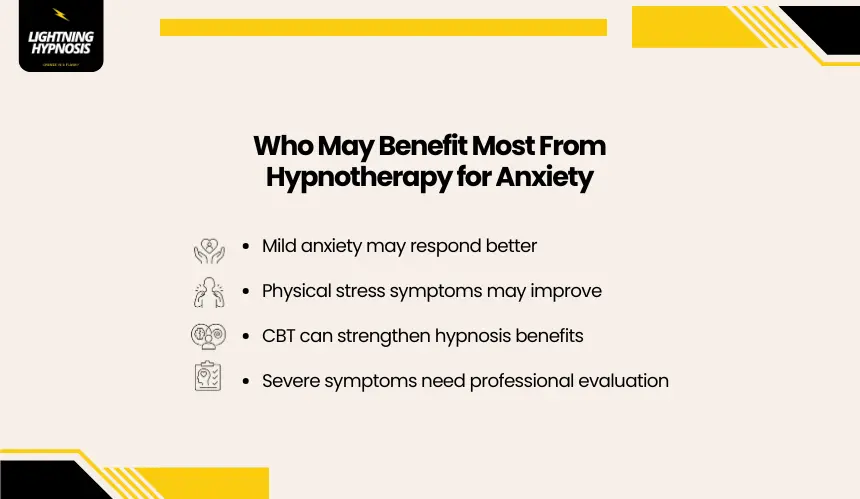
Hypnotherapy does not produce identical outcomes for every individual with anxiety. Treatment response depends on symptom severity, underlying triggers, coexisting mental health conditions, and the person’s ability to engage with hypnotic techniques. Current evidence suggests that certain groups may be more likely to experience meaningful benefits.
People With Mild to Moderate Anxiety Symptoms
Individuals experiencing mild to moderate anxiety may benefit from hypnotherapy as part of a broader symptom management strategy. In these cases, anxiety often involves excessive worry, anticipatory stress, or conditioned emotional responses rather than severe functional impairment.
Hypnotherapy may help these individuals develop relaxation skills, reduce physiological arousal, and build alternative responses to anxiety-provoking situations. However, persistent symptoms that significantly disrupt work, relationships, or daily functioning generally require comprehensive evaluation and evidence-based treatment.
Individuals Experiencing Stress-Related Physical Symptoms
Anxiety frequently affects the body in addition to emotional well-being. Muscle tension, headaches, sleep disturbances, gastrointestinal discomfort, palpitations, and chronic stress reactions are common manifestations of prolonged sympathetic nervous system activation.
Because hypnotherapy incorporates relaxation techniques and focused attention, some individuals report improvement in stress-related physical symptoms alongside reductions in perceived anxiety. This mind-body interaction explains why hypnosis has also been studied in pain management, irritable bowel syndrome, and procedure-related distress.
Using Hypnotherapy Alongside Cognitive Behavioral Therapy or Other Treatments
Research generally supports hypnotherapy as an adjunctive intervention rather than a stand-alone therapy. Combining hypnosis with cognitive behavioral therapy, stress management techniques, mindfulness practices, or physician-directed treatment may provide broader symptom management than relying on a single approach.
In some cases, hypnosis can reinforce coping strategies learned through psychotherapy by helping individuals rehearse adaptive responses, strengthen relaxation skills, or reduce anticipatory anxiety before stressful situations.
This integrated approach aligns with findings from the 2019 meta-analysis by Valentine et al., which reported stronger anxiety reductions when hypnosis was used together with other therapeutic interventions.
When Is a Professional Mental Health Evaluation Important?
Professional assessment becomes particularly important when anxiety symptoms are severe, long-lasting, or accompanied by additional psychological concerns.
Evaluation by a qualified mental health professional is recommended when anxiety:
- Interferes with work, school, or relationships.
- Causes panic attacks or persistent avoidance behaviors.
- Occurs alongside depression, trauma, or substance misuse.
- Leads to sleep disruption or significant physical symptoms.
- Includes thoughts of self-harm or emotional crisis.
Hypnotherapy may still have a role in these situations, but treatment planning should be guided by licensed healthcare professionals to ensure that underlying conditions are identified and appropriate interventions are provided.
What to Consider Before Choosing Hypnotherapy
Hypnotherapy is not a one-size-fits-all intervention. Evaluating practitioner qualifications and maintaining realistic expectations can help individuals make informed decisions.
1. Choosing a Qualified Hypnotherapist
Training standards vary between providers. Look for practitioners with formal education in hypnotherapy and, ideally, a background in psychology, counseling, social work, or healthcare. Professional certifications and experience treating anxiety-related conditions are additional factors to consider.
2. Questions to Ask Before Starting Treatment
Before beginning treatment, consider asking:
- What experience do you have treating anxiety?
- Which techniques do you use during sessions?
- Will hypnotherapy be combined with other approaches?
- How will progress be measured?
3. Expected Results and Timeframes
Responses to hypnotherapy vary. Some individuals notice improvements in stress management after a few sessions, while others require longer-term treatment. Hypnotherapy aims to reduce symptoms and improve coping abilities rather than provide an immediate cure.
When Other Evidence-Based Treatments May Be More Appropriate
Severe anxiety disorders, panic disorder, trauma-related conditions, or symptoms causing significant impairment often require evidence-based interventions such as cognitive behavioral therapy, medication, or multidisciplinary mental health care. Hypnotherapy may complement these treatments, but should not delay appropriate professional support.
If anxiety is affecting your daily life and you are looking for additional support, Lightning Hypnosis provides professional Hypnotherapy for Anxiety throughout the Greater El Paso region and surrounding areas in Texas and southern New Mexico. Our personalized sessions are designed to help individuals manage stress, improve emotional regulation, and develop healthier responses to anxiety triggers.
Frequently Asked Questions
How is hypnotherapy different from meditation for anxiety?
Meditation usually trains awareness through observation, breathing, or mindfulness. Hypnotherapy uses focused attention plus therapeutic suggestion to target specific anxiety patterns, such as anticipatory fear, avoidance behavior, or stress-linked body responses. Both can calm the nervous system, but hypnotherapy is typically more goal-directed and practitioner-guided.
Can hypnotherapy make anxiety feel worse at first?
Some individuals may feel temporary emotional discomfort if a session brings attention to avoided fears, memories, or physical sensations. This does not mean hypnotherapy is unsafe, but it shows why screening matters. People with trauma histories, dissociation, psychosis, or severe panic symptoms should work with a licensed mental health professional.
What if someone cannot be hypnotized easily?
Hypnotic responsiveness varies between individuals. Some people enter focused states quickly, while others need more preparation, relaxation training, or trust-building before they respond well. A skilled hypnotherapist can adapt the session using imagery, breathing, cognitive rehearsal, or self-hypnosis practice instead of relying on a single induction method.
Is online hypnotherapy useful for anxiety?
Online hypnotherapy can be suitable when the person has privacy, a stable internet connection, and a qualified practitioner guiding the session. It may work well for stress management, mild anxiety, and guided relaxation work. Severe symptoms, crisis concerns, or complex trauma require more careful clinical assessment before virtual hypnotherapy is used.
Can hypnotherapy help with panic attacks?
Hypnotherapy may support panic management by teaching the body to recognize early arousal signals and shift into calmer breathing, muscle relaxation, or grounding responses. It should not replace diagnosis or treatment for panic disorder. Frequent panic attacks, avoidance behavior, or fear of future attacks require a professional mental health evaluation.
Is self-hypnosis enough for anxiety management?
Self-hypnosis can reinforce relaxation, coping statements, and emotional regulation between sessions. It is usually more effective after a person learns proper technique from a trained provider. For persistent anxiety, self-hypnosis works best as a support tool rather than the only treatment strategy.